
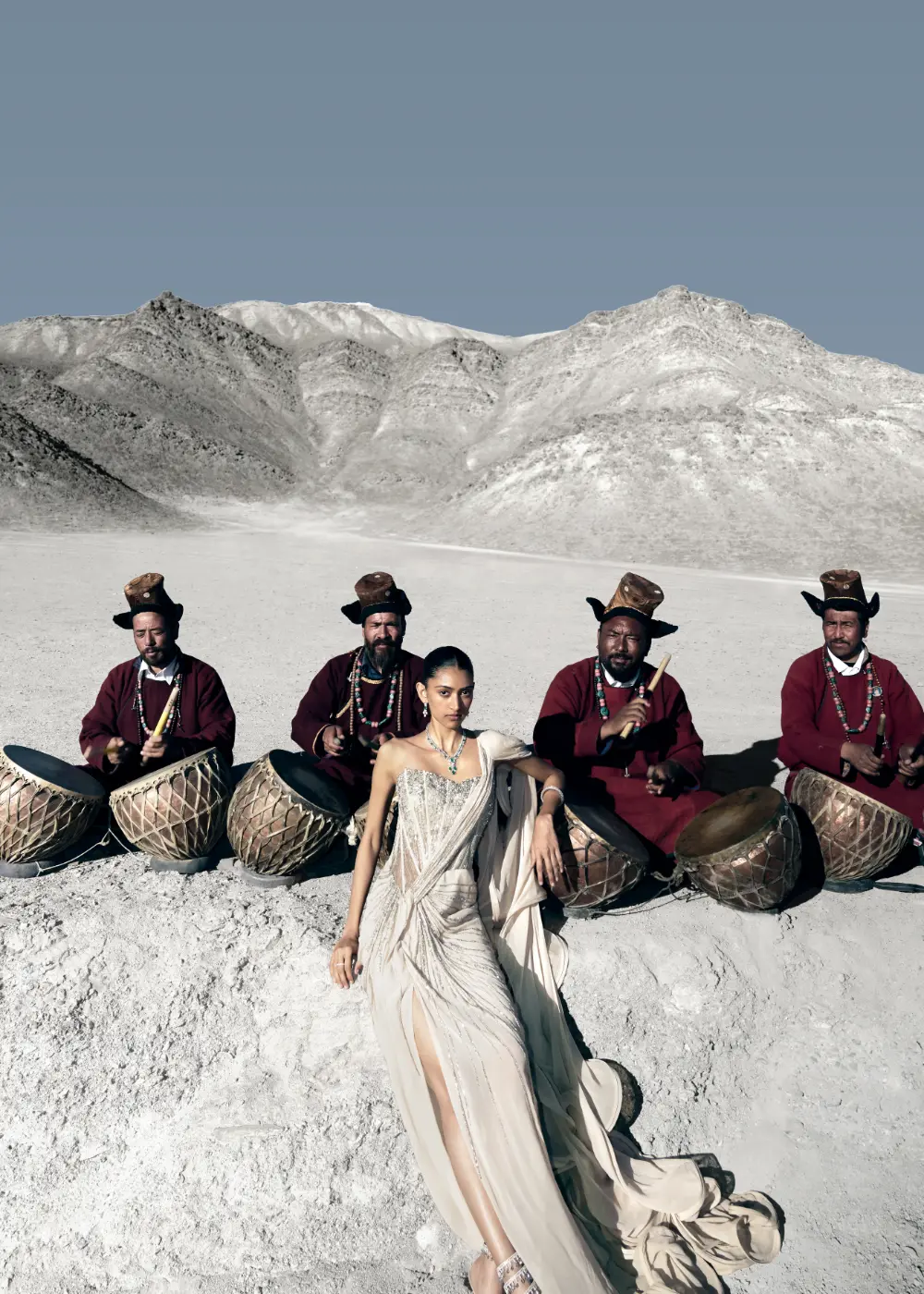
 Dhyany in a Meteoric saree gown with asymmetric corset and ruffle pallu with crystal embroidery, with people from Ladakh
Gaurav Gupta Couture has dedicated himself to engaging with India’s indigenous and tribal communities, beginning this year with a deeper journey into living artistic traditions sustained through ritual, craftsmanship, memory, and oral inheritance across generations.
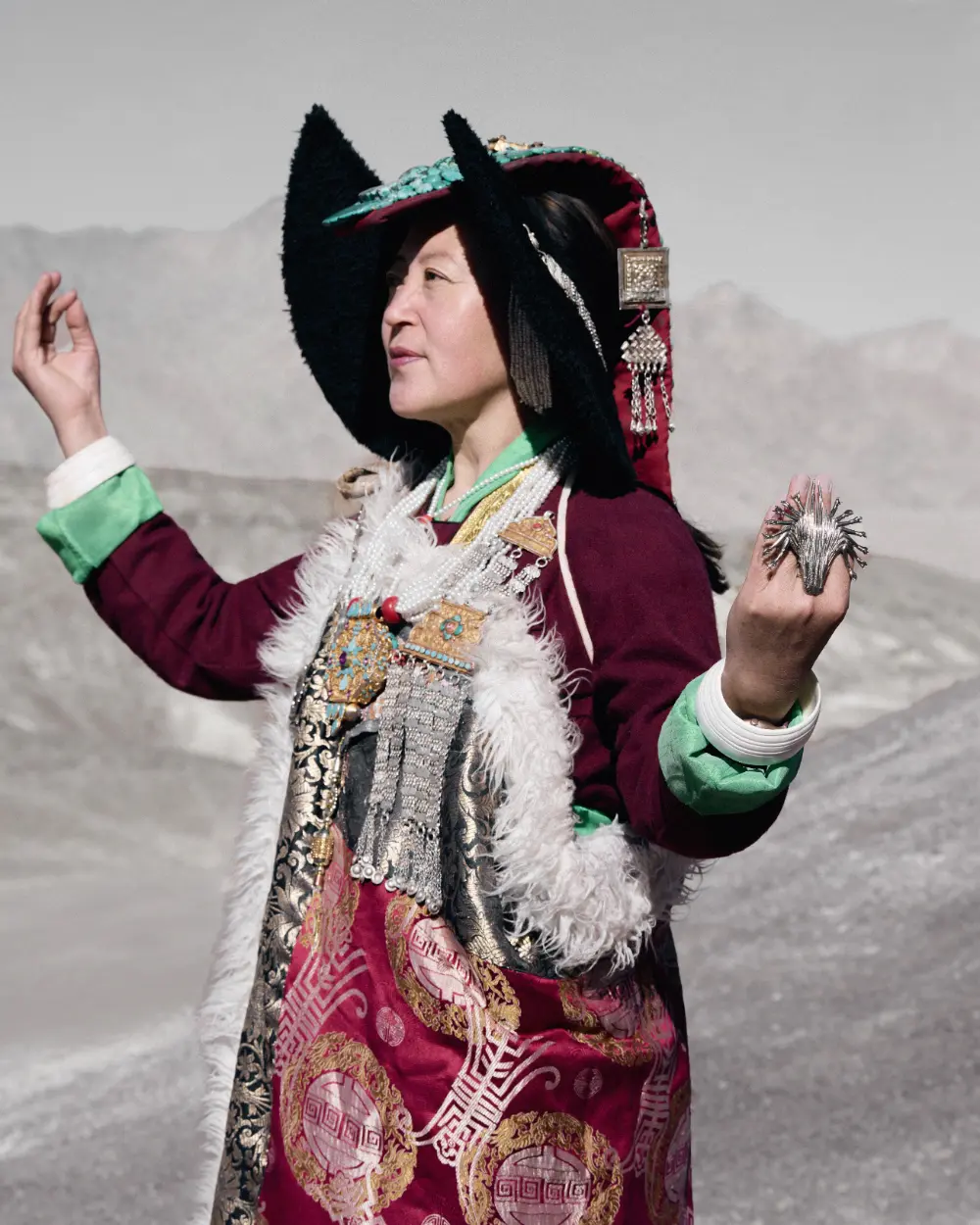 Ladakhi people perform the Shondol and Shonta Lima folk dance
For the couturier, this chapter opens in Ladakh. Entitled ‘Lha: The Living Spirit, the project is conceived as an exploration of communities and their cultural knowledge at the center of the narrative, and is rooted in Ladakhi belief systems, where the land is a living presence, and where every mountain, river, and valley carries its own spirit, known as Lha.
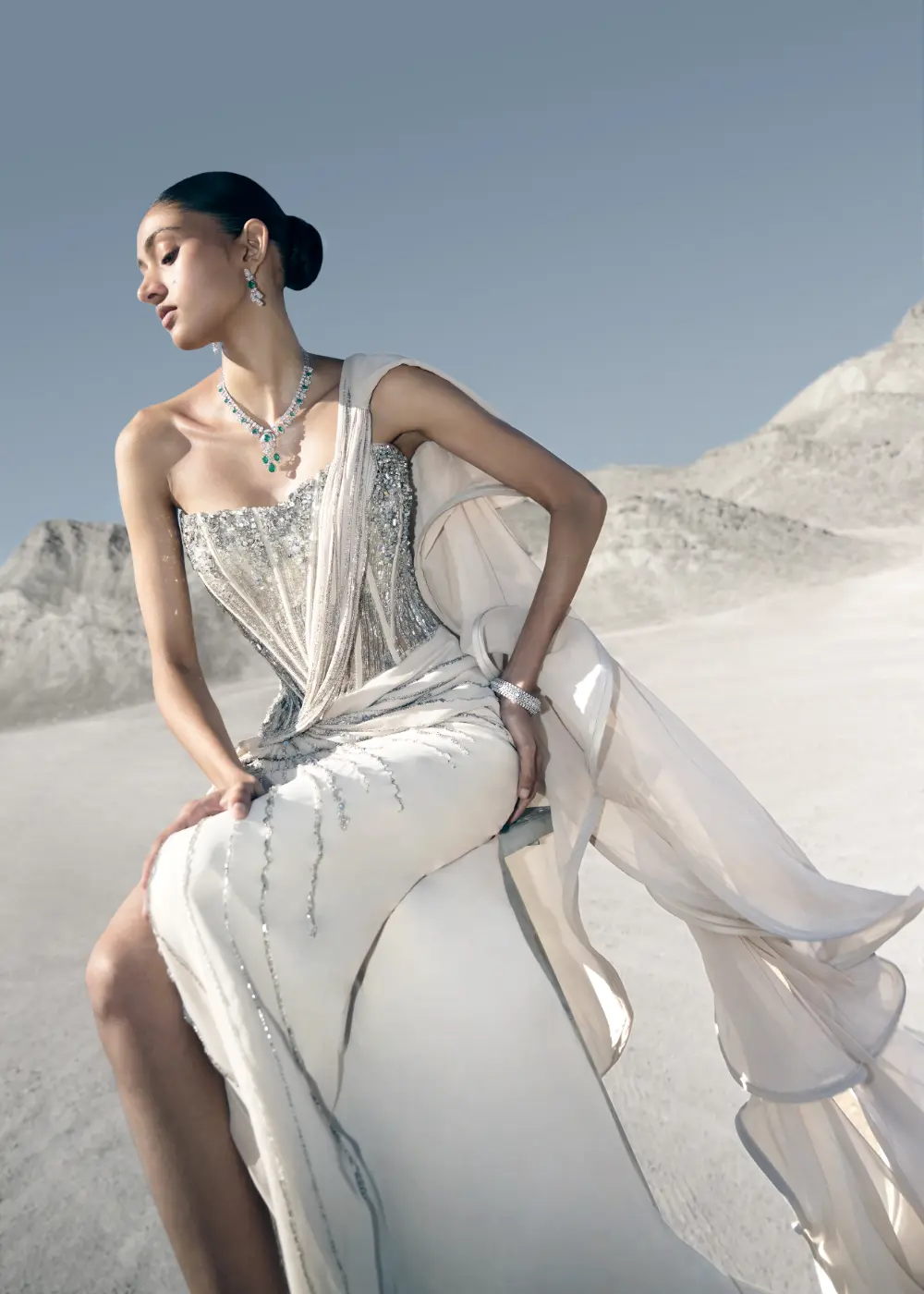 Dhyany in a sage saree gown and corset
The Ladakh project focuses on two cultural forms of the region, the traditional folk dances Shondol and Shonta Lima, along with the ceremonial rhythms of the Daman drum. With roots tracing back over 500 years through Ladakh’s monastic, royal, and village traditions, Shondol and Shonta Lima remain among the Himalayan region’s surviving folk dance forms today. Passed down orally across generations, the dances preserve community memory through synchronized formations, measured footwork, and collective rhythm. Shondol, in particular, has long been associated with royal processions and ceremonial gatherings across Ladakh.
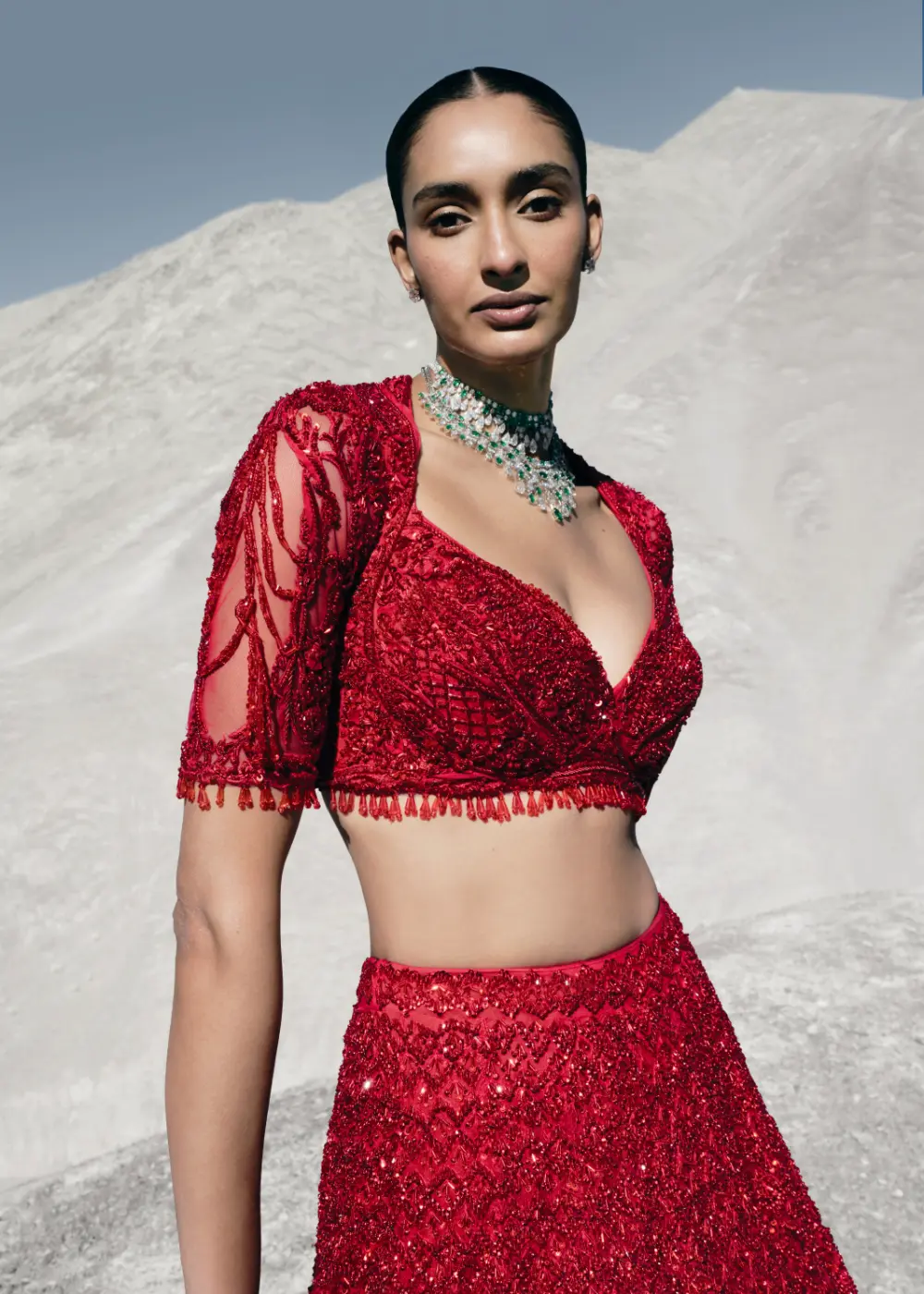 The Art Nouveau lehenga has 60,000 bugle beads, zardozi florals and crystals
The performance is accompanied by the Daman drum, one of Ladakh’s oldest ceremonial instruments, played during festivals and communal gatherings for over 400 years. Leading the performance is senior Daman drummer Baba Napo, also known as Tsewang Phunchok, who has practiced the form for over 15 years, inheriting the tradition from his father, himself regarded as one of the region’s respected Daman players. In Ladakh, these musical lineages continue through lived practice and generational memory.
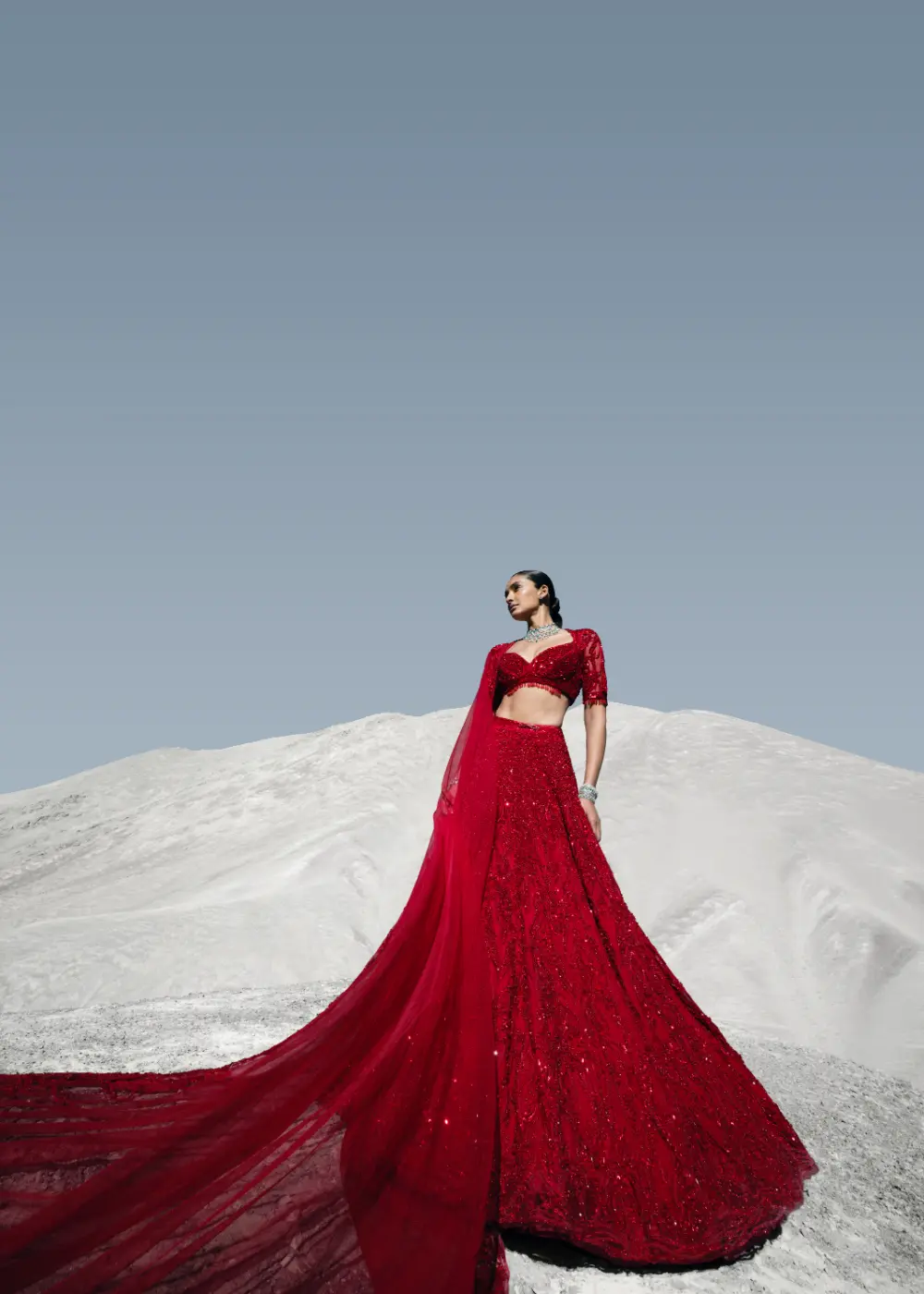 Dayena in an Art Nouveau lehenga
Shot across the picturesque landscapes of Ladakh, the project begins with a cultural and spiritual layer, documenting real voices and lived experiences. Conversations with monks, elders, and local communities form the foundation of the narrative, grounding it in authenticity rather than performance.
The narrative approaches the wedding not as a ceremony, but as a journey of discovery. It repositions the bride as a vessel of presence, reflecting a belief that certain bodies are capable of holding onto and forging a deeper connect to the land and its energies.
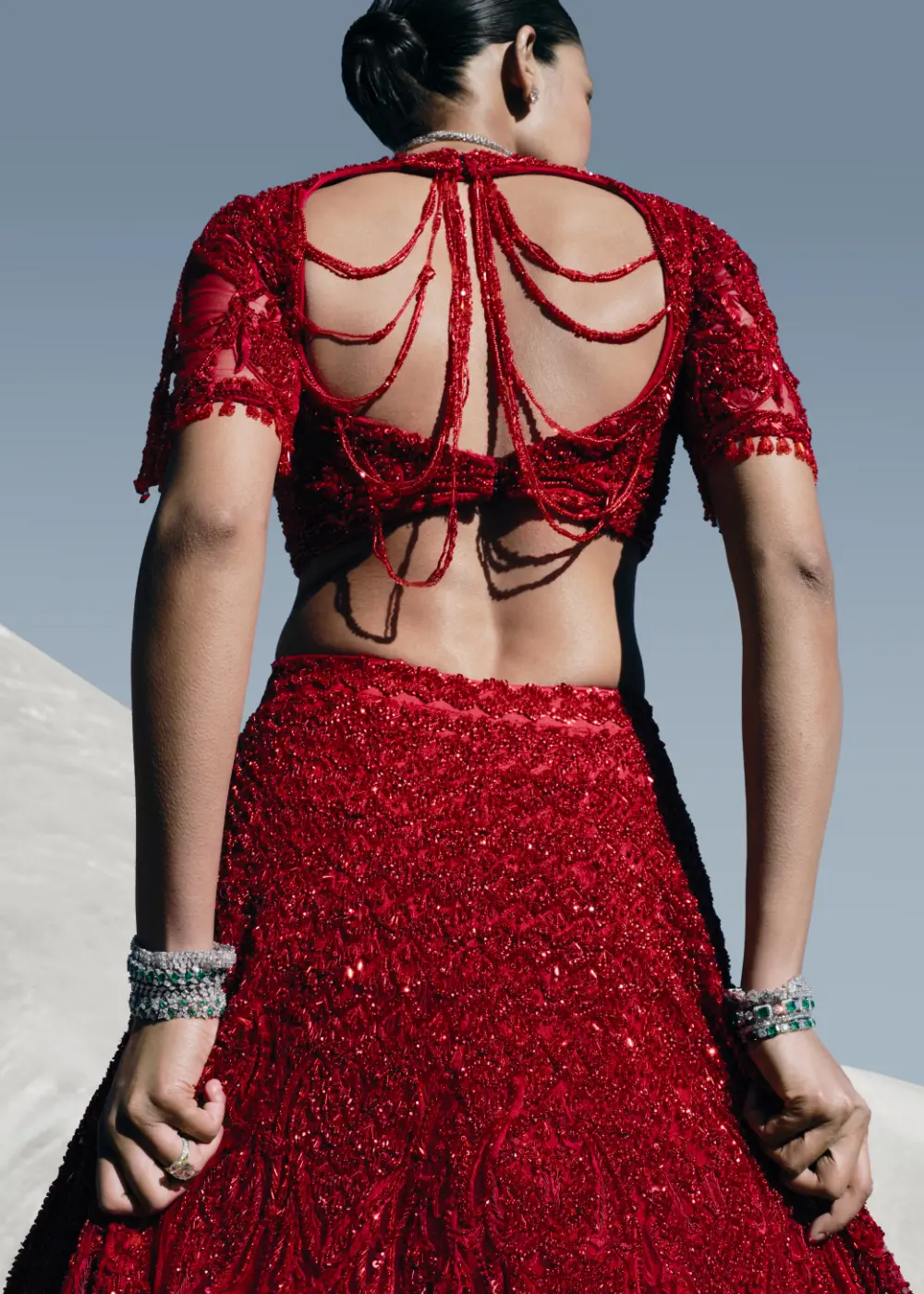 The back and motifs are inspired by the Art Nouveau movement
The storytelling unfolds across distinct landscapes, each representing a different expression of Lha. The river explores reflection and stillness, where the movement of water is contrasted with the quiet presence of the bride. The meadow introduces movement and transition, capturing wind, light, and the shift from day into evening celebration. Apricot blossom reflects renewal and awakening, marking a rare moment of life in an otherwise barren terrain. The dry landscape presents an abstract interpretation of the wedding day, where processions, sound, and collective movement come together in a structured yet organic form.
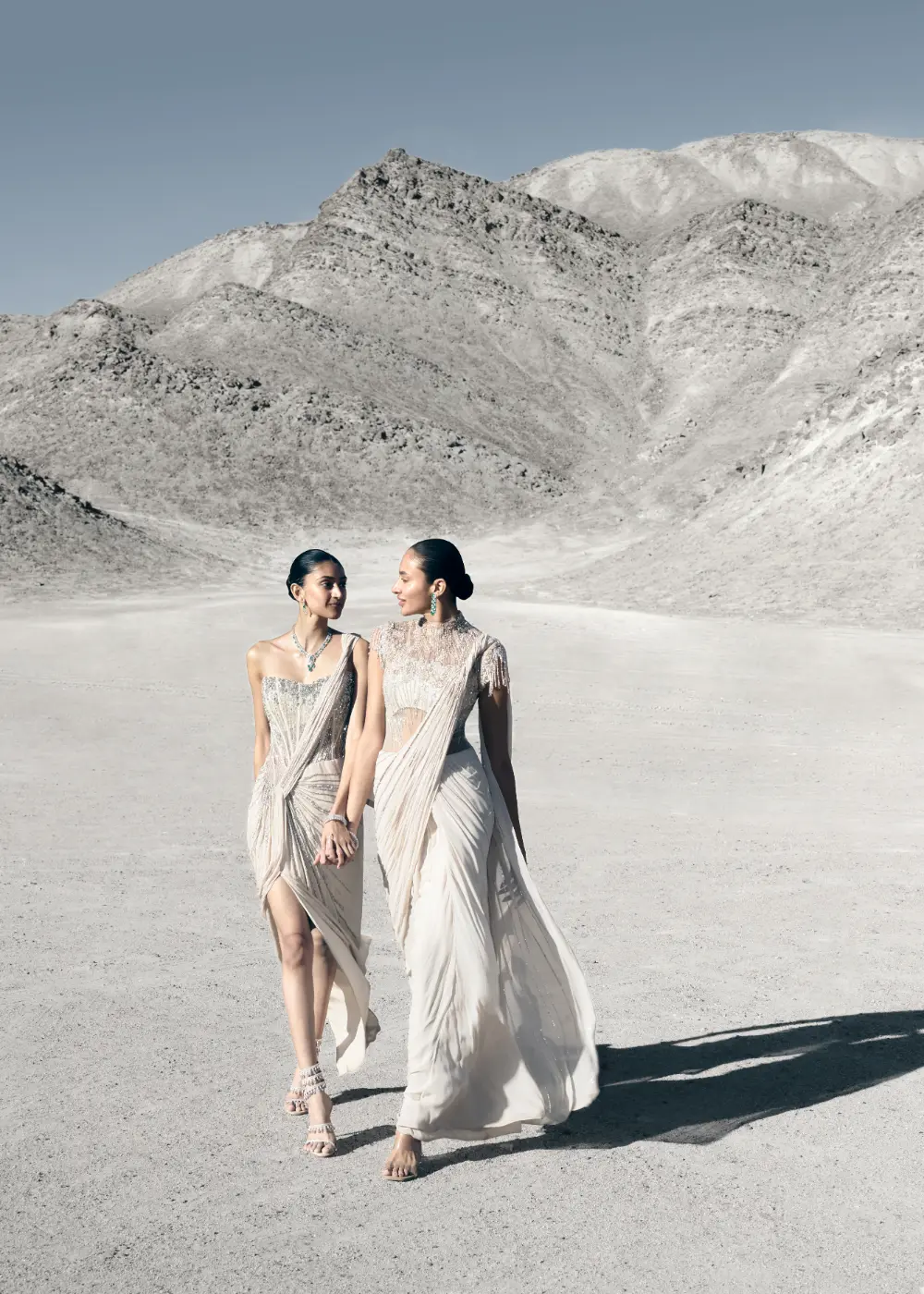 Dhyany, left, in a saree gown and corset, and Sonalee, right, in a saree gown with high-neck embroidered yoke, and pleating across bodice
Sound plays a central role throughout the narrative. Traditional drums, chants, wind, and silence are treated as a form of communication rather than performance, drawing from Ladakhi traditions where sound is used to connect with unseen forces.
The project integrates local tribal communities, musicians, and dancers as primary contributors to the narrative. Their presence is not symbolic, but integral, shaping the rhythm, movement, and emotional depth of the work.
For Gaurav Gupta, this initiative is about creating space for living traditions, performers, and communities whose cultural practices continue to shape the artistic identity of India beyond museums and archives.
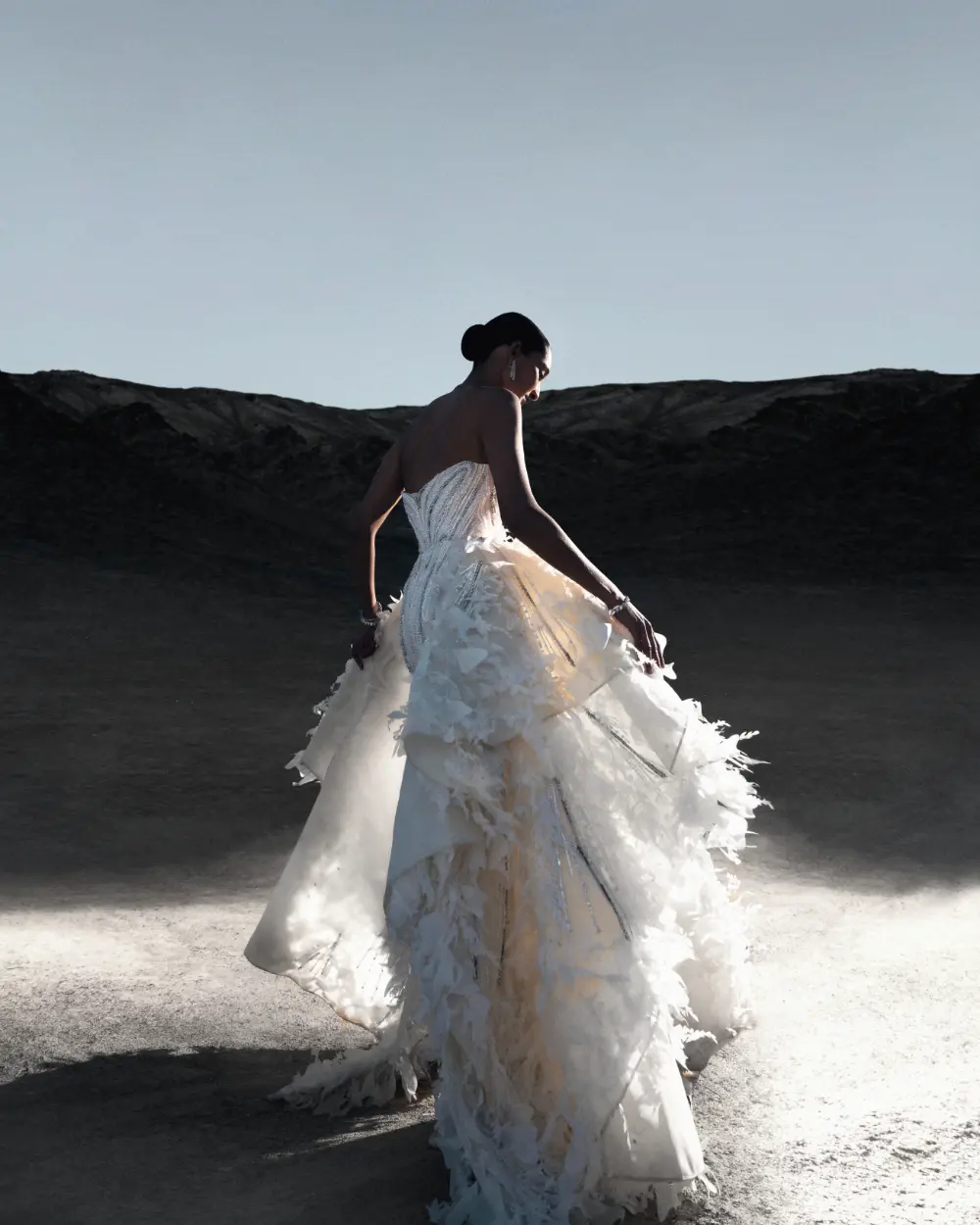 Dayena wears the Ivory Whisper gown with petal-like bodice embellished with pearls
The wardrobe reflects this shift in perspective. The collection introduces lighter, fluid bridal options alongside jewel toned evening pieces, designed for a new generation of brides seeking a more personal and intuitive expression of ceremony.