
The unveiling of Piaget’s 21st Century collection in Basel in1969 was a watershed moment for both watches and jewellery. Under the eye of designer Jean-Claude Gueit, Piaget timepieces throughout the 60s and 70s became jewellery pieces without limits, their faces wrought in ornamental stones of dazzling colour, their shapes exaggerated as ovals, rounds, and cushion, and the iconic trapeze.
A year ago, for Watches and Wonders 2025, Piaget deep dived into the Maison’s rich archives with a new jewellery watch collection with a reimagined shapes. Plunging into the late 60s, this case is a generous, yet femininely proportioned trapezoid, evocative of the era’s nickname “the Swinging Sixties”.
A new design watch, simply named Sixtie for its origins, and for the simplicity of its function – to mark sixty seconds, sixty times an hour. Today, Sixtie anchors itself in new territory and straps in for the launch of its two new versions, deep into the blue, at Watches and Wonders 2026.
 The Piaget Blue pendente, with the Sixtie
Adorned with Stone
The brand new Sixtie, launched in 2025, celebrated its origins : a jewel to grace the wrist, no longer defined purely by its role as a timepiece but its position in the pantheon of Piaget’s iconic jewellery watches as conceived in the 1960s – a timepiece as fluid as a jewel, its lines unmistakeably feminine yet with a wink to its masculine counterpart also adorned with gadroons, the more symmetrical cushion-shaped Andy Warhol watch.
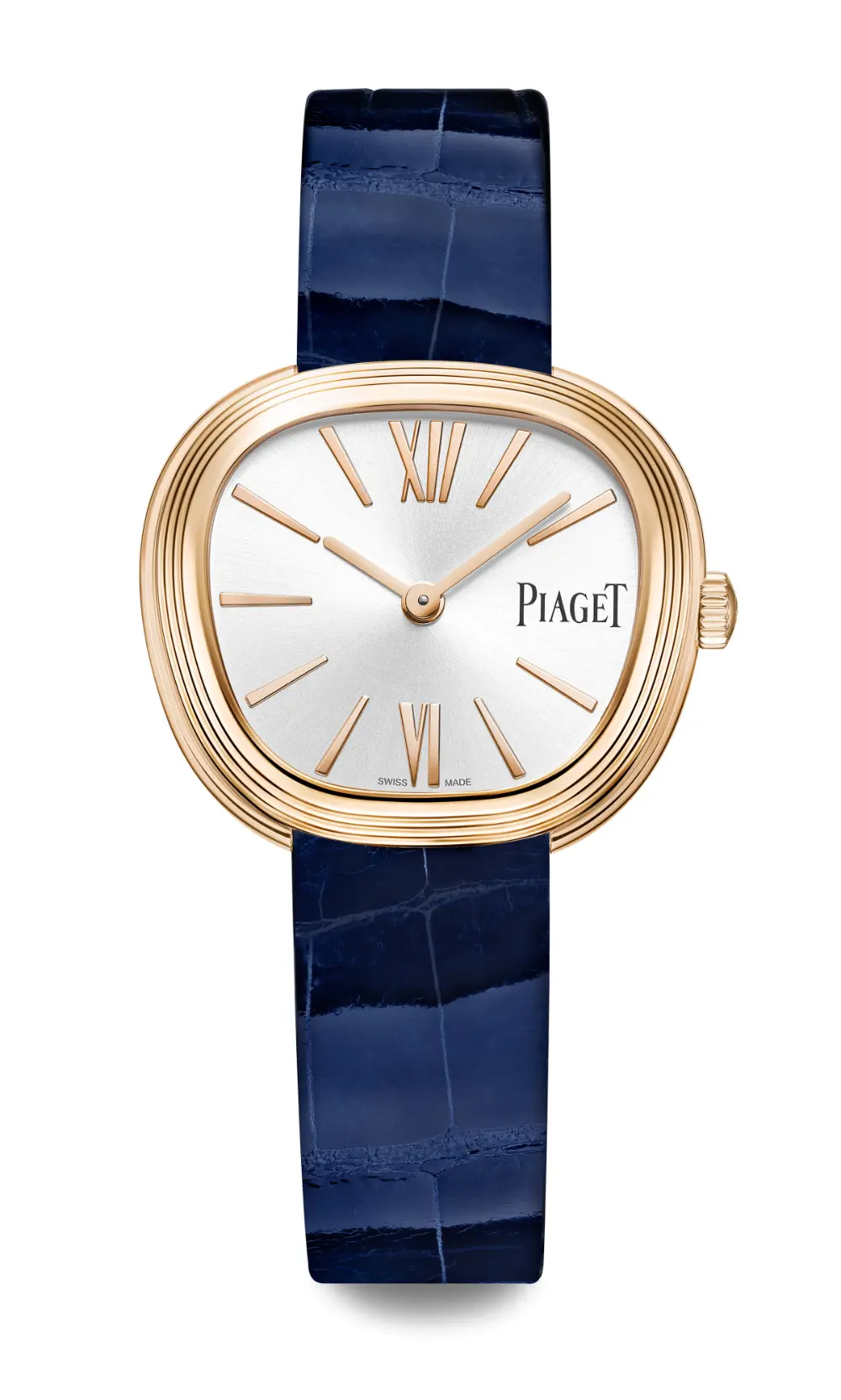 The 29 mm Sixtie in an 18k pink gold case and blue alligator strap, with a silvered satin-brushed dial
Forgoing the precious metal bracelet of the original, these two new versions see the Sixtie anchor itself in the most maritime of hues, on deep blue alligator straps calibrated for all times. Chicly unembellished, the gently gleaming, dark blue strap accentuates he minutely detailed gadroons that swoop around the bezel, each one individually etched into soft, satiny pink gold, the perfect foil to the strap’s depth of colour. Linked by the new ardillon buckle, also trapeze-shaped and decorated with the same sweeping gadroons, the blue straps encase two variations of dial; the first, a silvered solar satin-brushed dial, sprinkled with golden Roman numeral markers. A bright light against a deeper, darker hue.
The second, in keeping with Piaget’s prowess with ornamental stone dials, unveils a face in blue quartz. Exceptionally hard to maximize longevity, the material is also distinct in its markings – a rich, marbled blue veined with darker streaks, each one entirely unique and perfectly in tune with the blue alligator strap. A new blue dial to echo the vibrant turquoise dial which was unveiled in 2025, marking again the fusion between the best of both worlds: dressing the jewellery watch in a magnetic ornamental stone dial. The result? Chic, distinctive, and effortless.
Piaget’s fascination with ornamental stones began in 1963, when Gérald and Valentin Piaget, grandsons of the founder, Georges-Édouard Piaget, were in the process of transforming the Swiss company into an international Maison, with a modern, fashion-forward approach, specializing in both jewellery and watchmaking.
 A gold watch with a coloured stone dial, G0A51188. Photo by Brigitte Niedermair
Ever since 1963, when Piaget dared to make gold jewellery watches and dress their dials in vibrant ornamental stones such as lapis lazuli, turquoise, malachite or tiger’s eye, the Maison has been famed for its wayward way with colour, an essential element of Extraleganza.
In 1957 Piaget decided to work only in precious metals and materials, and invented the groundbreaking 9P ultra-thin movement, which liberated design and creativity. This revolutionary movement meant that dials could be larger and then adorned with ornamental stones while maintaining the watch (legendary) thinness. The dial became the decorative focal point of the design, claimed by Piaget as the new territory of creative expression.
Unexpected jolts of bold colour, of pop-art-inspired mother-of-pearl and onyx, or modernist, graphic compositions of lapis lazuli and jade, intensified the shock of the new delivered by Piaget’s milestone launch in 1969 of the 21st Century Collection, which transformed the jewellery watch into a contemporary artwork and a cultural icon.
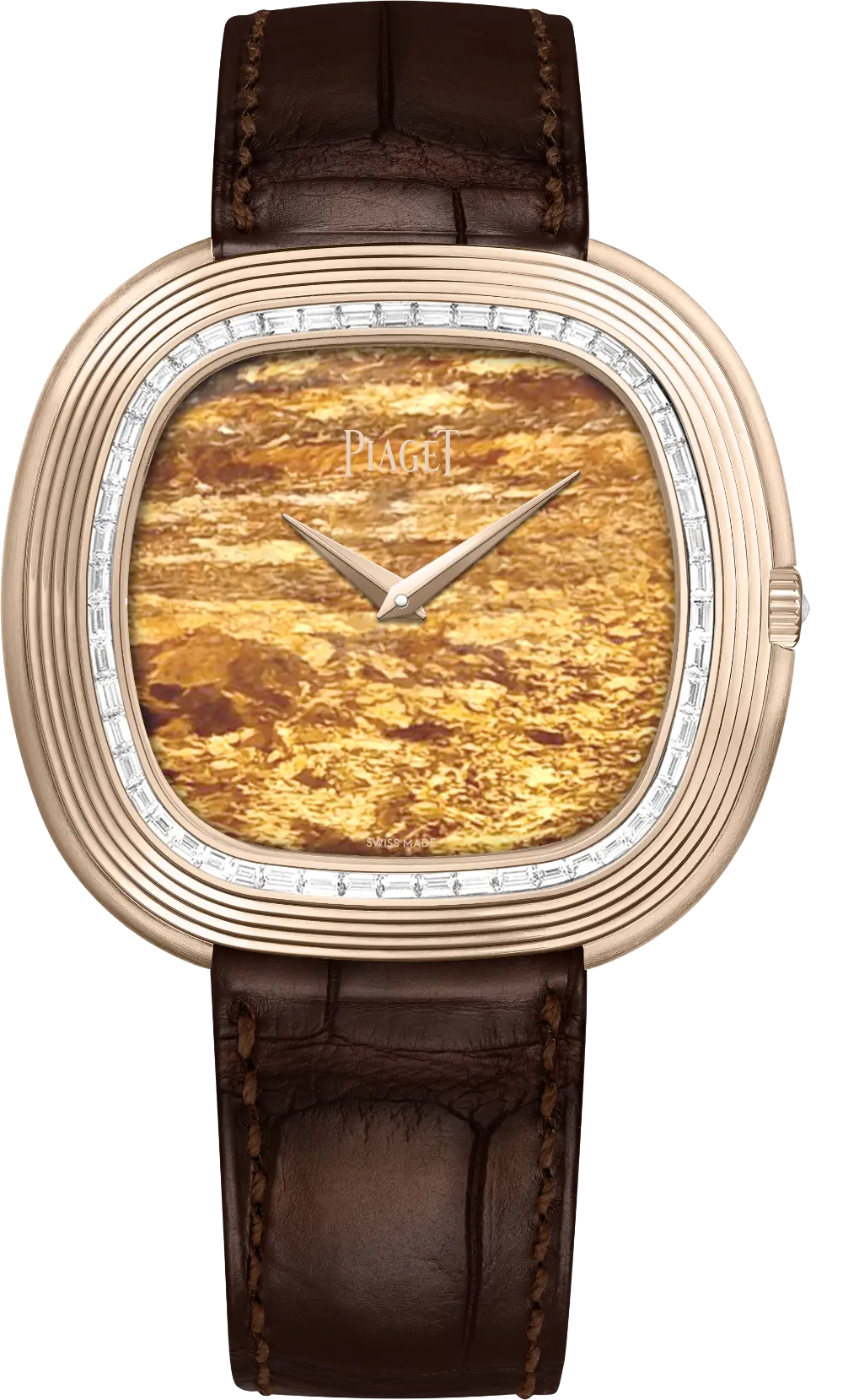 The 45 mm Andy Warhol High Jewellery watch G0A51237 in rose gold, with gadroons and diamonds
Now, for 2026, as Piaget delves even deeper into its heritage, connecting past and present times, to renew its creative spirit of timeless modernity, the Art of Colour is reignited, through an exploration of new and intriguing varieties of ornamental stones, set in characteristically audacious style throughout the year’s new timepieces.
As it turned out, Piaget’s timing was perfect; the new watches captured the mood of the moment, anticipating and responding to the dramatic social and cultural shifts that were to define the 1960s and 70s.
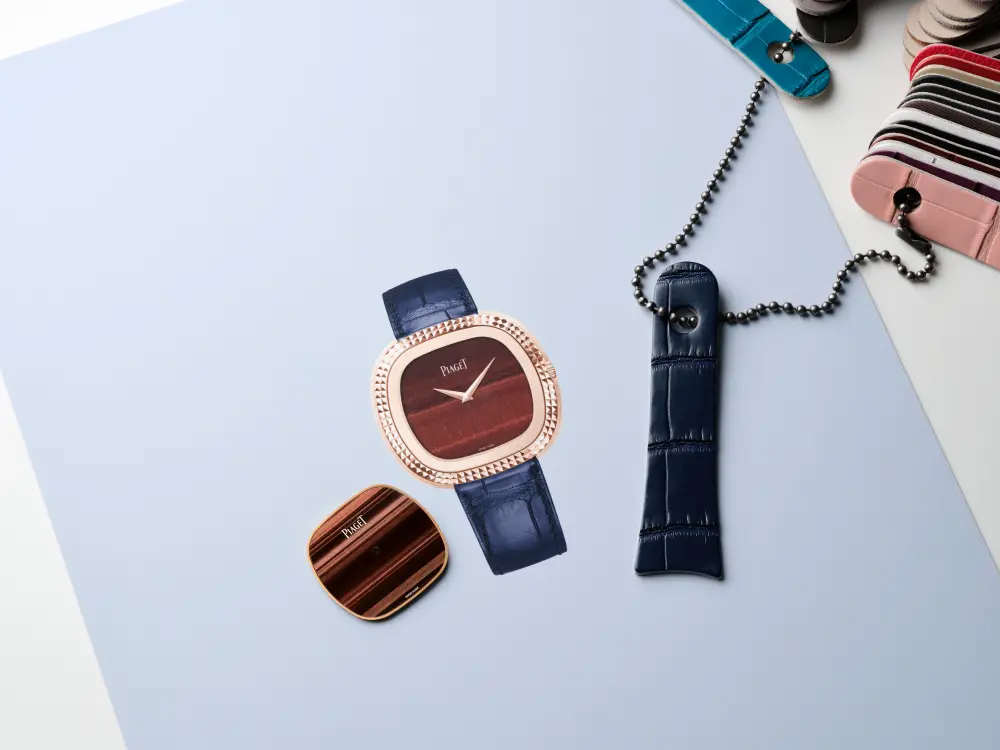 The Andy Warhol watch - work in progress
Since then, Piaget’s art of colour has continued to gather momentum, along with its mastery of skills, of cutting, slicing, polishing ornamental stones. Exceptional skill and mastery of material and technique are required to cut the stones to the required thinness (down to 0.4 mm) and precision of form, and then polish them to a glossy sheen, to bring out the individual markings; the jeopardy in the process means there is a high risk of breakage.
The 45 mm Andy Warhol High Jewellery watch G0A51237 in rose gold, with gadroons and diamonds
2026, A Living Legacy
Today, Piaget’s Art of Colour shines out through three striking colourways that connect to the Maison’s history. On one side, the shades of blue, a tribute to Piaget’s signature colour, which now adorn the Sixtie on a strap, the Piaget Polo 36mm in pink gold or the Andy Warhol watch with a set of blue quartz dials.
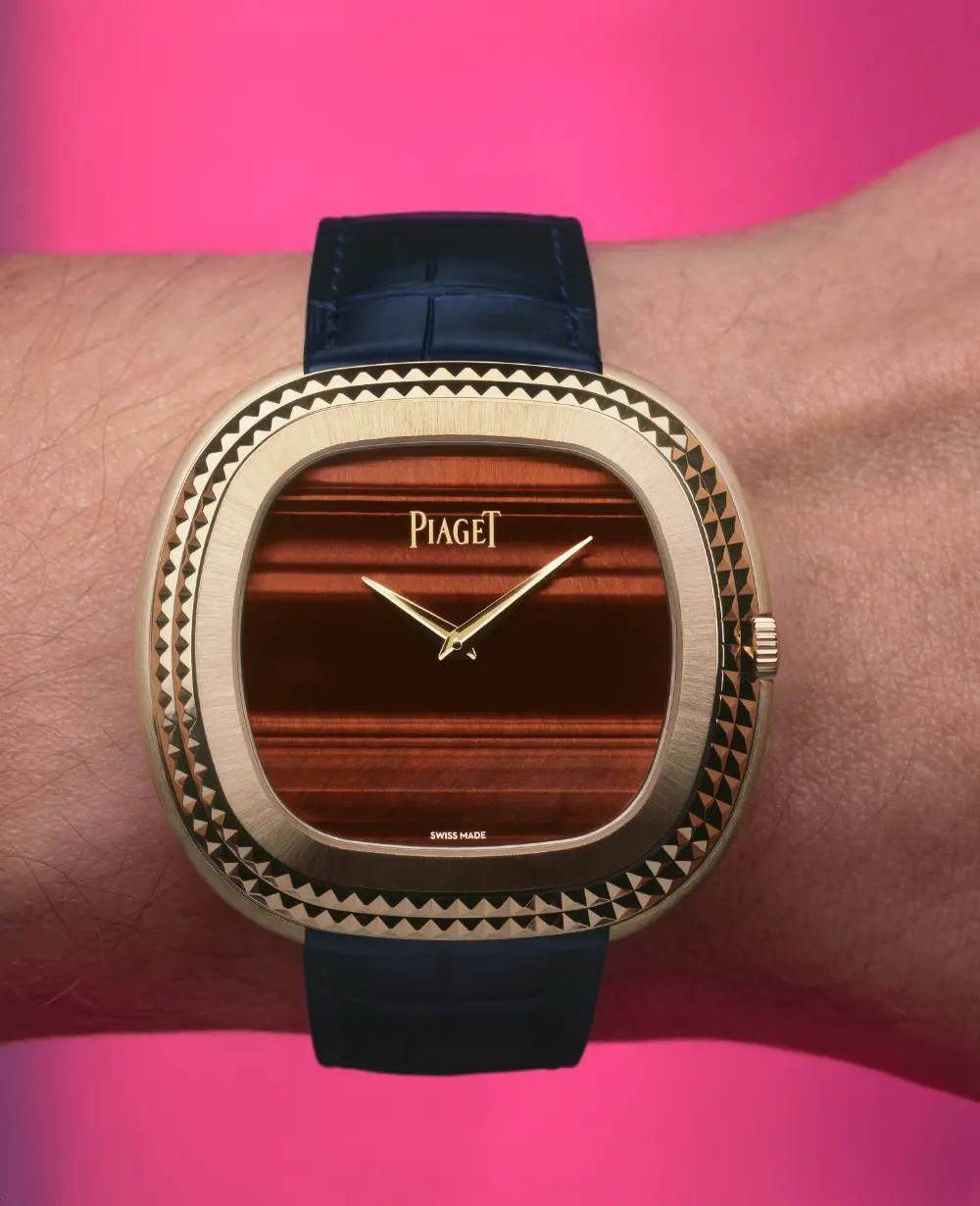 The 45 x 43 mm Andy Warhol G0A51245 in pink gold
Another Andy Warhol model, sought-after collector’s item, offers a choice of dial and case: a warm, reddish brown bull’s eye, with shimmering chatoyancy, in a studded Clou de Paris case, launched in 2024 in a white gold version.
A Cuff Watch and Swinging Pebbles: Times in Motion
Following the reintroduction of the cuff watches and Swinging Sautoirs in 2023, a new High Jewellery adaptation of the Sixtie reinvents the iconic 1970s cuff watch using one of Yves Piaget’s favourite stone to echo the Piaget Society, the bluish opal with its many hues, within the softly contoured trapezoid form of the Sixtie, in a ‘Décor Palace’ gold engraved bracelet and 355P Manufacture quartz movement.
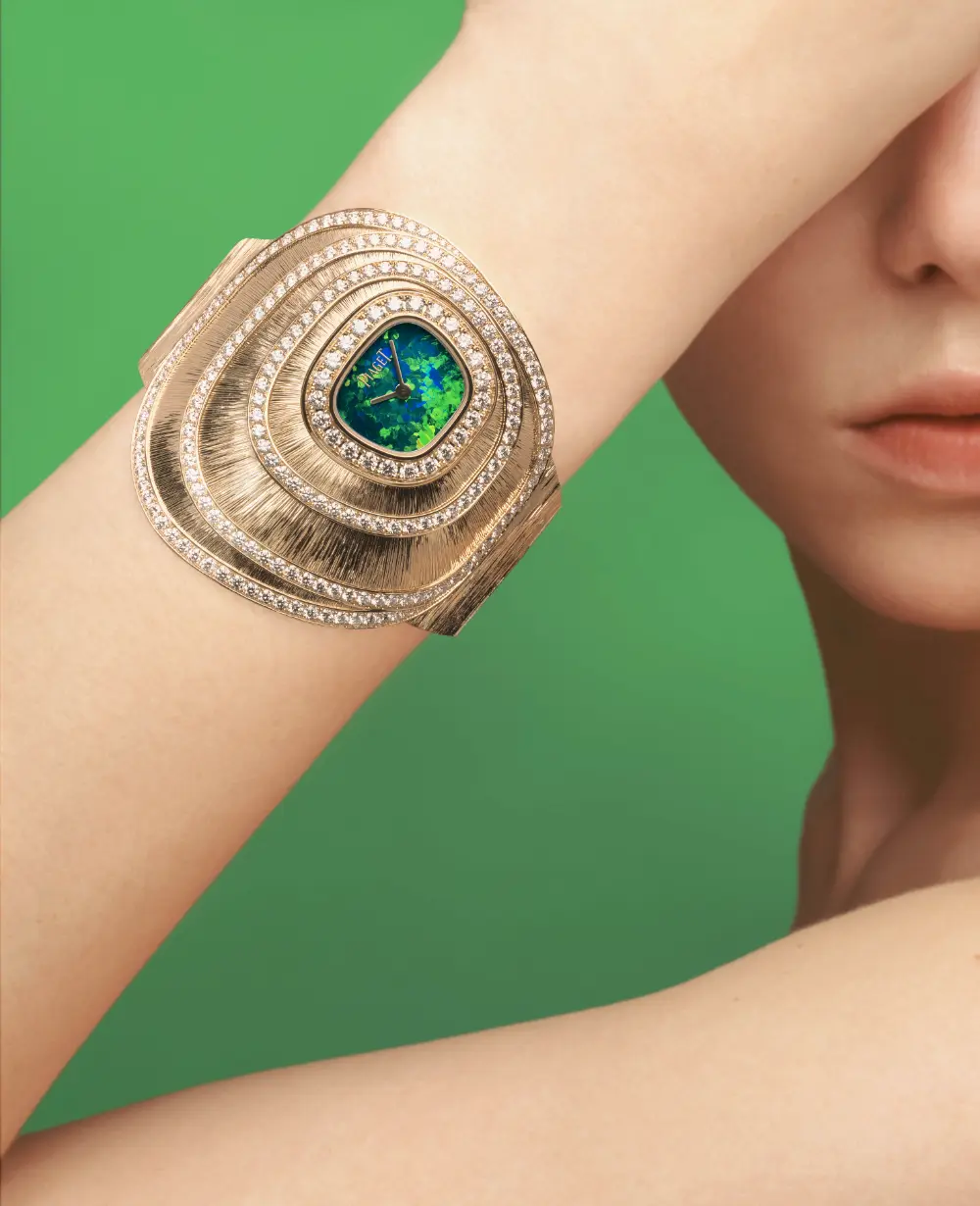 Sixtie High Jewellery Cuff Watch G0A51350. Photo by Brigitte Niedermair
A bit of history: When Piaget introduced its 21st Century Collection in 1969, composed of cuff watches and sautoirs, it redefined what a watch could be. These were not mere timepieces, but wearable works of art. A watch transformed into a swinging expression of time, blending Piaget’s heritage of gold craftsmanship, ornamental stones, and daring design into a revolution which has since changed the face of watchmaking.
Throughout the 1970s, Valentin Piaget worked closely with visionary designers such as Jean-Claude Gueit to bring this artistry to life in a spontaneous way. Piaget crafted extraordinary, one-of-a-kind pieces for a clientele that valued this joyful creativity. Watches were not only to be seen, but also to be felt, with shapes, colors and textures forming an emotional connection with their wearer.
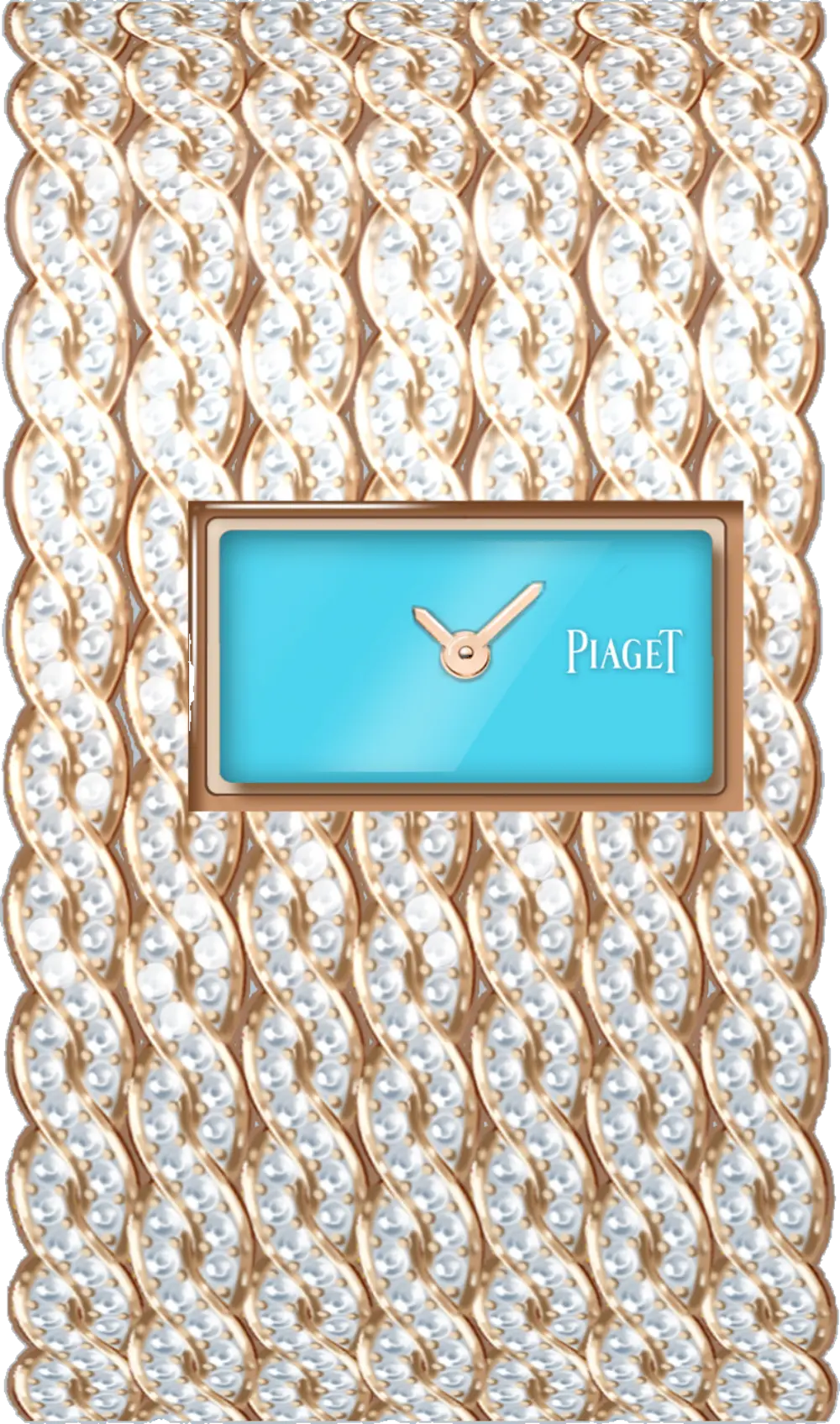 Cuff Watch G0A51258
Then there’s a cuff watch with a turquoise dial and a cuff made of twisted gold mesh and diamonds, with a 355P Manufacture quartz movement and submersible to 3ATM.
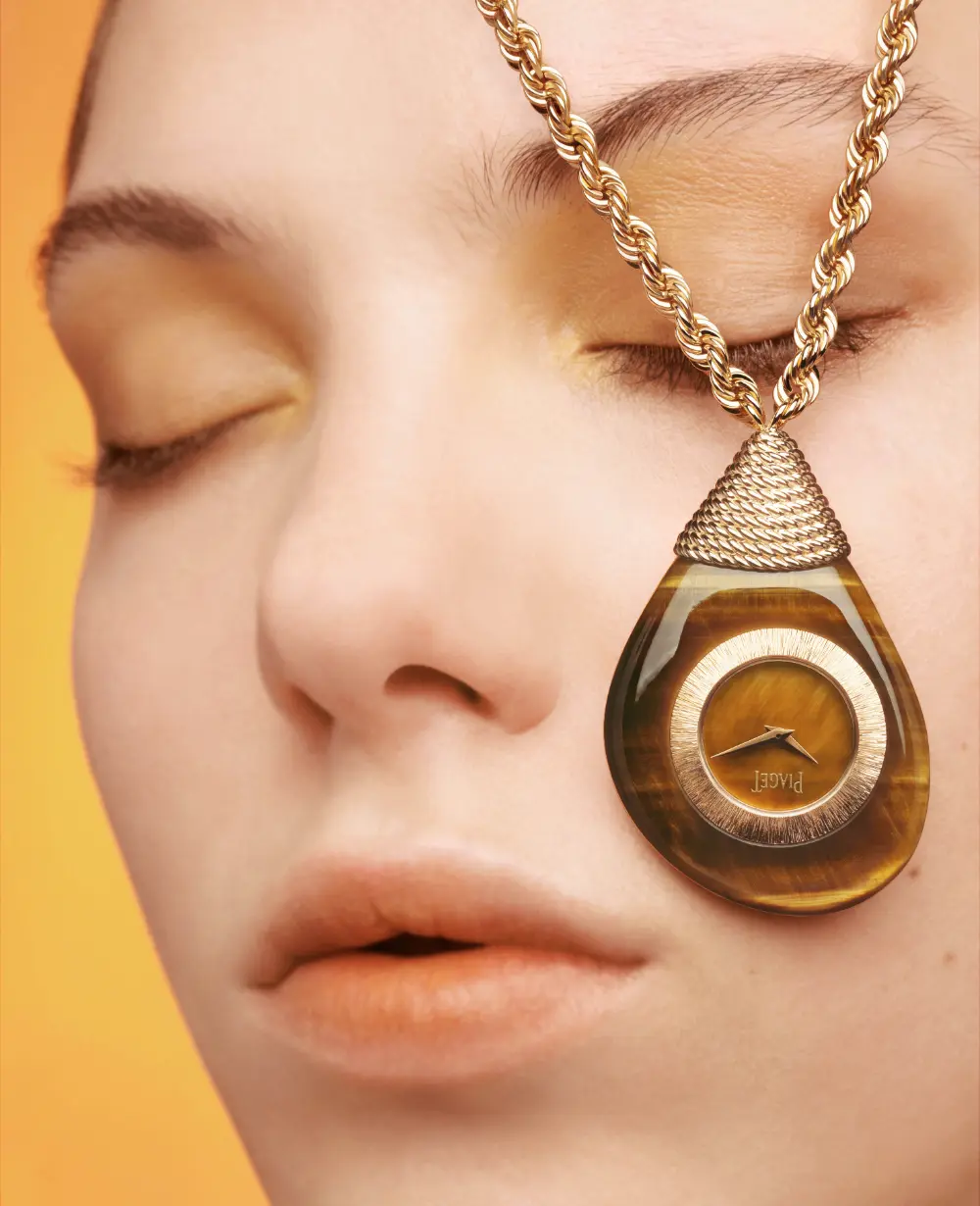 Swinging Pebbles G0A51410., Photo by Brigitte Niedermair
These Swinging Sautoirs were the perfect embodiment of Piaget’s free spirit, infused with the energy and optimism of the 1970s. Time became movement, flowing gracefully across ornamental stone dials, suspended from luminous gold chains that draped, twisted, and danced with every gesture. With these fluid gold chains, ornamental stone dials, and tactile design, the Swinging Sautoir became a Piaget signature. As Yves Piaget used to say “A watch is first and foremost a piece of jewellery.”
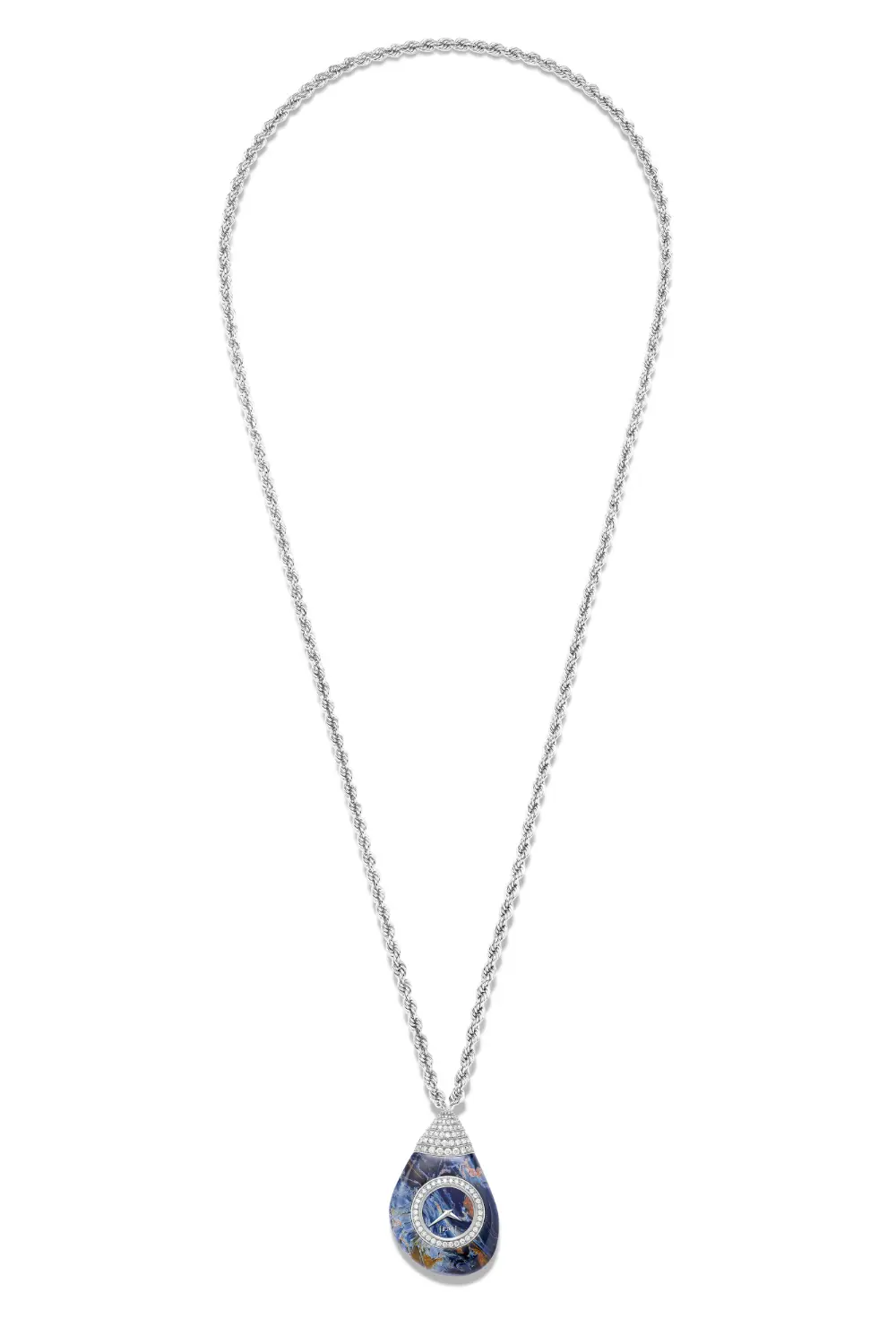 Swinging Pebbles G0A51409
And for Watches and Wonders 2026, Piaget also reinvents the 1972 Kimono pocket watch (sculpted from malachite and defined by their soft, asymmetrical shapes) as three Swinging Pebbles necklaces and channels that same creative energy into a new collection of modern Swinging Sautoirs, named Swinging Pebbles, seamlessly carved from a trio of ornamental stones: tiger’s eye, verdite, or pietersite. Each pendant watch is sculpted from a single slice of stone, delicately hollowed out to house a Manufacture movement before being closed to form a smooth, pebble case. Each pendant hangs from a sinuous, twisted gold chain, tribute to Piaget’s expertise in goldsmithing and chain-making for the daily life.
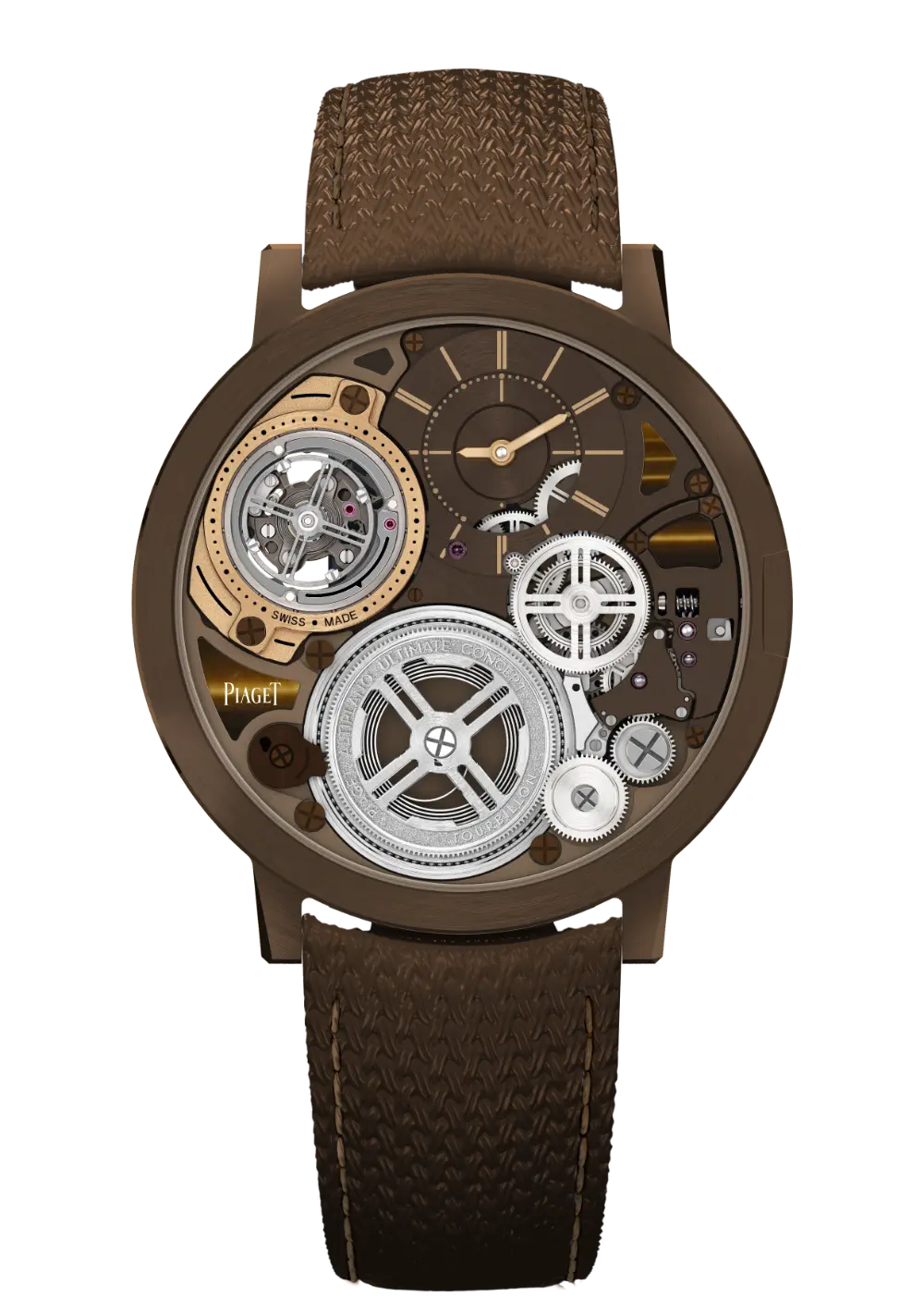 Altiplano Ultimate Concept Tourbillon Tiger Eye G0A51540
A Tourbillon set in Stone
But Maison Piaget also celebrates its High Watchmaking by introducing The Altiplano Ultimate Concept Tourbillon, now integrating an ornamental stone into its record-breaking 2mm profile.
The stones are mounted on components integral to the movement, necessitating a cleaning process to remove residues without causing any damage to the stones. An operation performed using a 0.15mm needle (the finest utilized by Piaget), which demands exceptionally careful handling and meticulous assembly. The rich mellow brown model, with pink gold, incorporates honey-hued tiger’s eye, and reprising the 1960s Style Selector, the Maison also offers a choice of case, of four colours, and a choice of four ornamental stones, tiger’s eye, blue sodalite, jade, and onyx, along with other personalized details. A fittingly thrilling, characteristically audacious finale to Piaget’s 2026 rich legacy of ornamental stones.
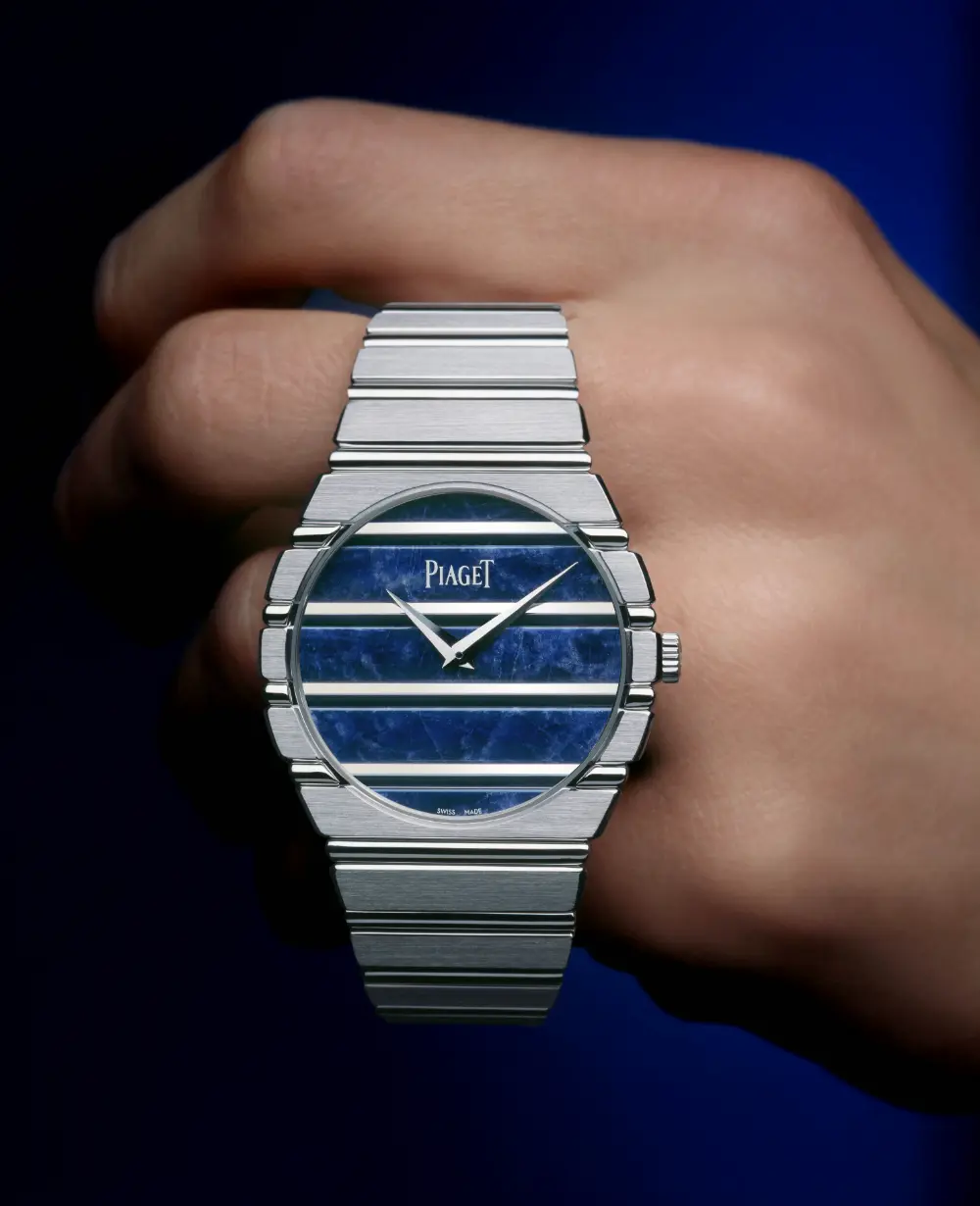 The 38 mm white gold Piaget Polo 79 G0A51151 with sodalite dial. Photo by Brigitte Niedermair
The Piaget Polo, Date, and Signature: A Legacy of Gadroons
While the 1970s saw the advent of a wave of sport-chic watches chiselled in steel, Piaget made history with a watch launched in 1979, which stood out for its unique style and its model name (a first for the Maison): the Piaget Polo. Fully forged in gold, this timepiece quickly made a name for itself as an avant-garde icon, defying the prevailing style codes of its time. A keen horse rider, Yves G. Piaget fused his love of polo and of high society into a watch that came to define 80s glamour, which could be worn just as easily in Palm Beach clubs as at Chez Régine in New York. “The entire philosophy behind the Piaget Polo can be summed up in a single sentence: it is a bracelet featuring a watch, not a watch featuring a bracelet...”, as Yves G. Piaget liked to say. With its hundreds of grams of gold, its distinctive design and its elegance, it won over the general public and the jet set of the era, from Ursula Andress to Andy Warhol.
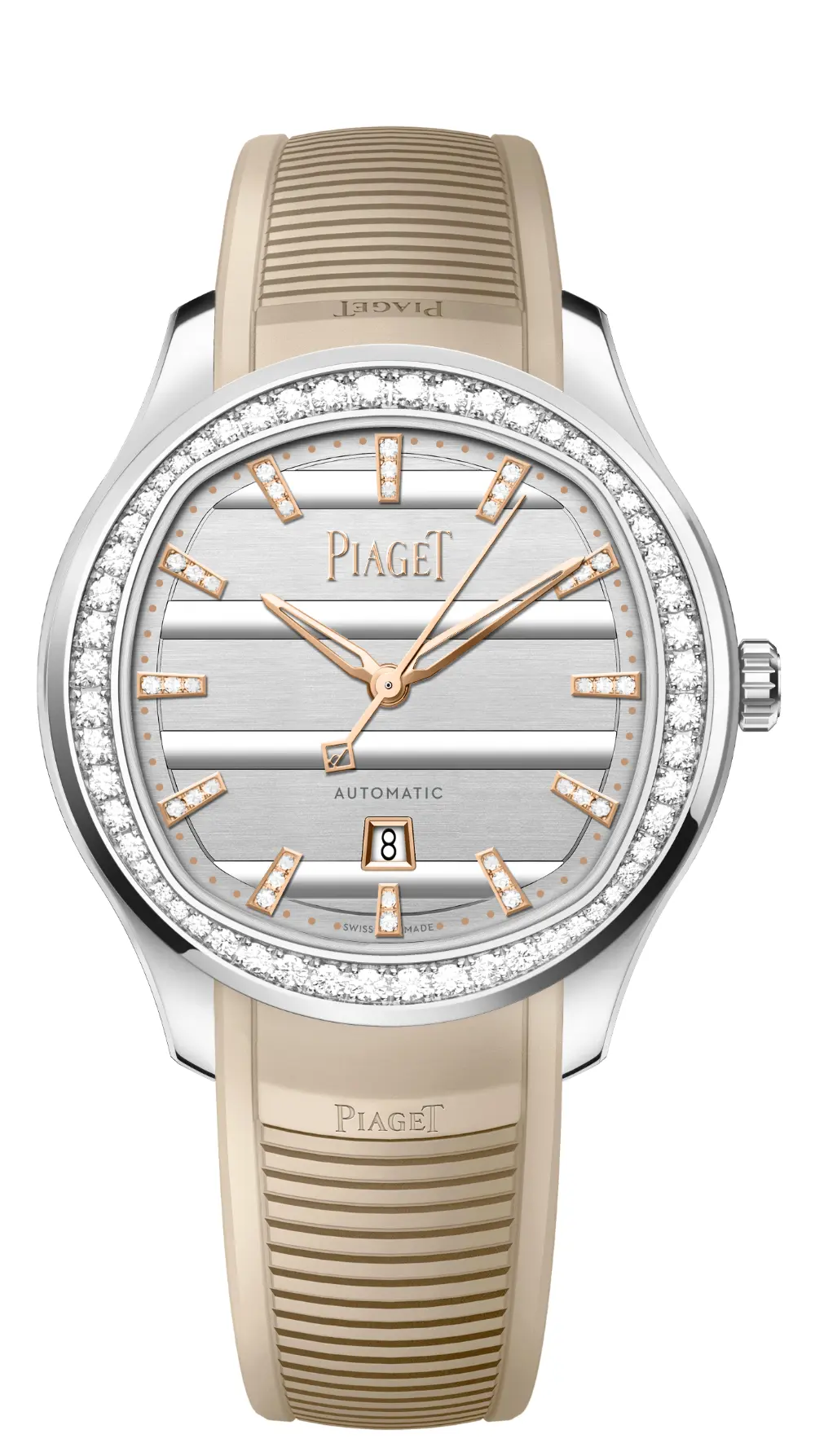 The 36 mm Piaget Polo Signature G0A51036 in pink gold with diamond set bezel
Far more than just simple striations, the gadroon (which combines concave and convex shapes in relief) decorative feature brings a touch of sophistication to Piaget watches. Showcasing sensational materials and a subtle play on depth, it enhances the shape and reveals the true beauty of every Piaget Polo timepiece. From 1979 to 2026, gadroons have reigned supreme on the Piaget Polo 79. Now, they are also making an appearance on the iconic Piaget Polo dials, specially redesigned for the occasion.
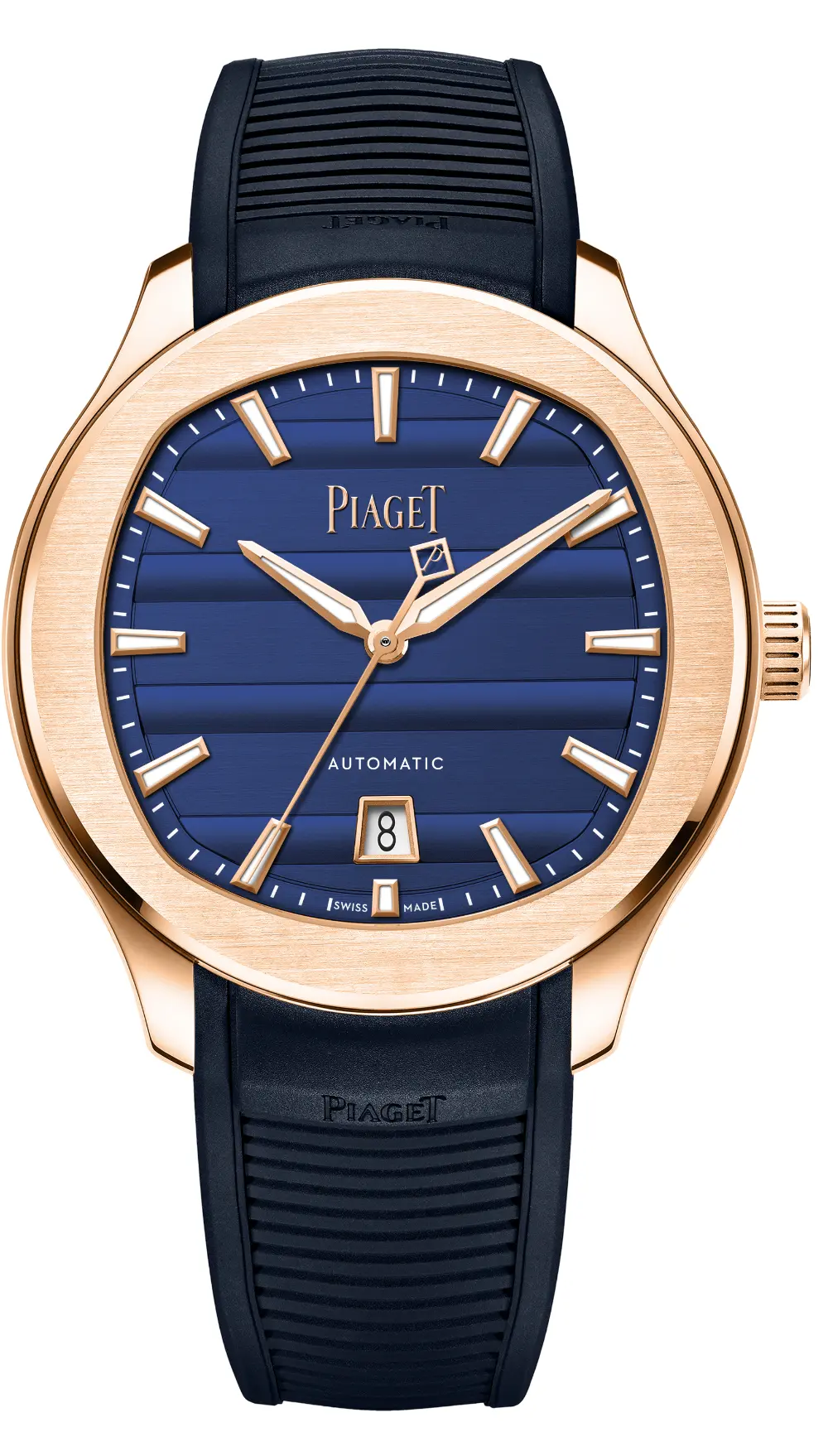 The 42 mm Piaget Polo Signature Dates G0A51033 in pink gold
To mark the 2026 edition of Watches and Wonders, the Maison has therefore applied the charm of its signature gadroons to a new white gold Piaget Polo 79 with a sodalite dial and to a stylish couple’s watch. It is also offering a new take on the spirit of its beloved Piaget Polo Signature Date. The interplay of hypnotic graphic lines created by the Piaget Polo 79’s signature gadroons now features on the entire range of blue Piaget Polo dials, joined by two new gold creations in the 42 mm case size (steel or rose gold case, interchangeable rubber strap or steel bracelet, gem-set or non-set dial), as well as by three 36 mm versions: steel case and gem-set indexes, gem-set bezel and indexes, as well as a precious version in rose gold with a bezel and indexes set with diamonds. This new face showcases Piaget’s iconic blue, elevating the Piaget Polo Signature collection’s harmonious blend of shapes - a round case with a cushion cut.
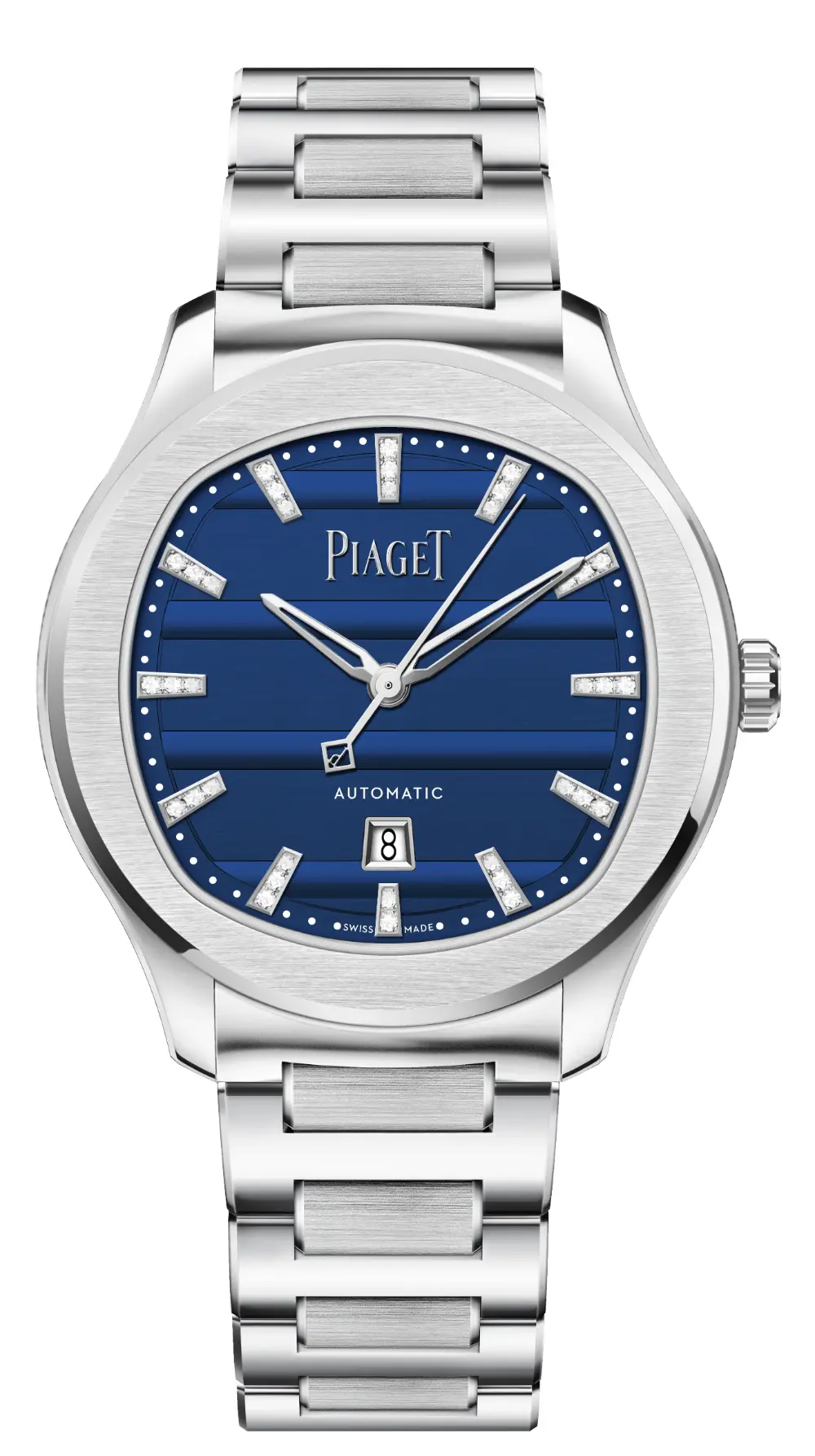 The 36 mm Piaget Polo Signature G0A51035 with steel bracelet and 36 diamonds on dial
Highly versatile, the Piaget Polo 79 has taken on multiple variations over the years, right up until this season, when it returns in a two-tone version, still in 38 mm, powered by the ultra-thin self-winding movement 1200P1. Following on from the success of the Piaget Polo 79 in yellow gold, white gold and now in two golds, the Piaget Polo 79 is now being adorned with another of the Maison’s signatures: ornamental stone. Previously, the model showcased onyx and lapis lazuli; today, for the very first time, ornamental stone features in the contemporary range on a precious sodalite version. The contrasting mineral dial highlights the uniqueness of the gadroons so beloved by Maison Piaget.
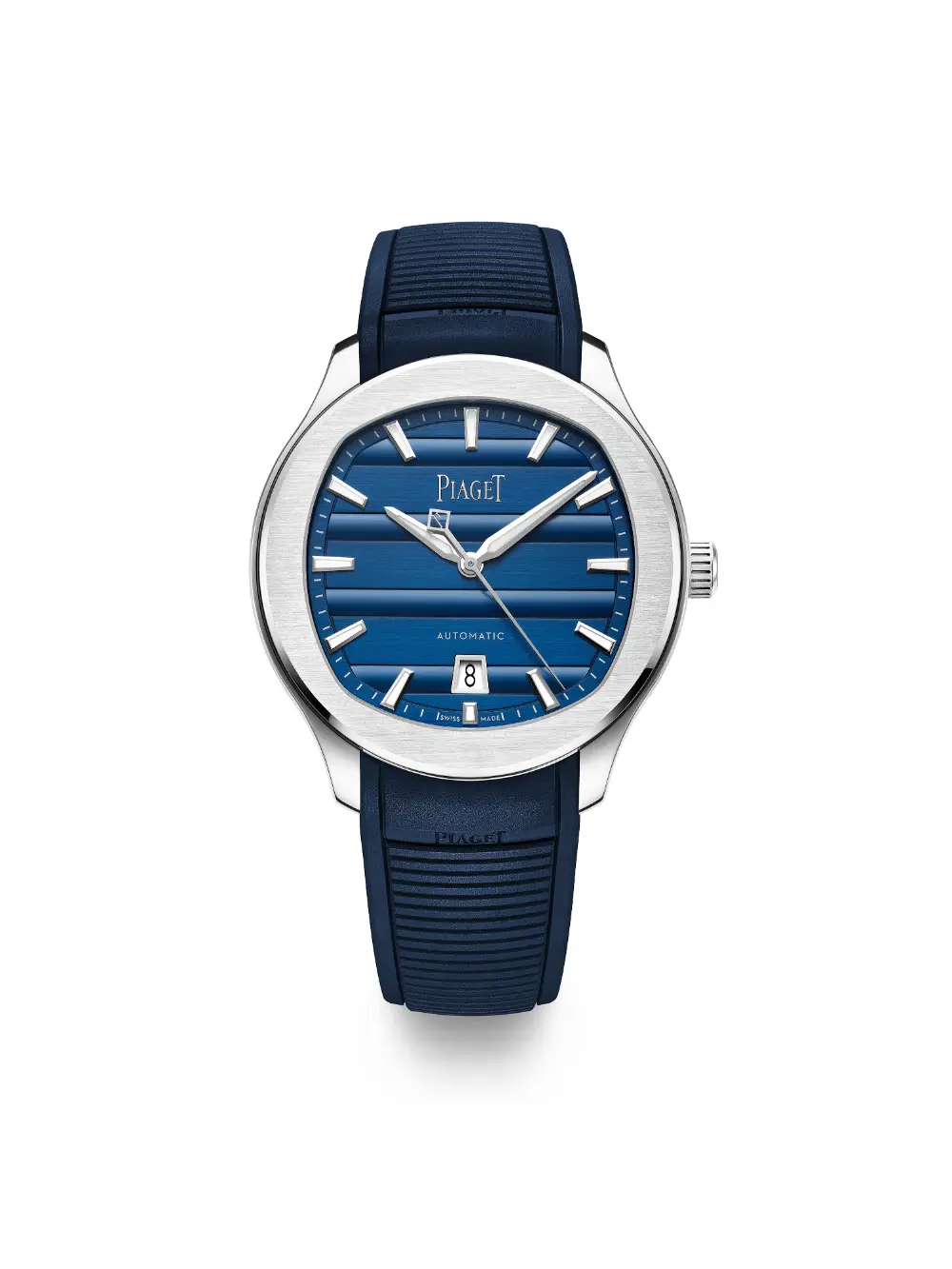 Piaget Polo Signature Dates G0A51031
An Elevated Duo
In 2024, Maison Piaget celebrated its 150th anniversary, a historic milestone that was the perfect opportunity to revive a tradition cherished by Mr Yves Piaget himself: the couple’s watch, the same creation designed for him and for her in an endlessly versatile form. Two years later, this iconic approach continues with a new highly desirable edition replicating the signature gadroons of the Piaget Polo 79, which elevate the timepieces in this Piaget Polo collection adapted for everyday wear.
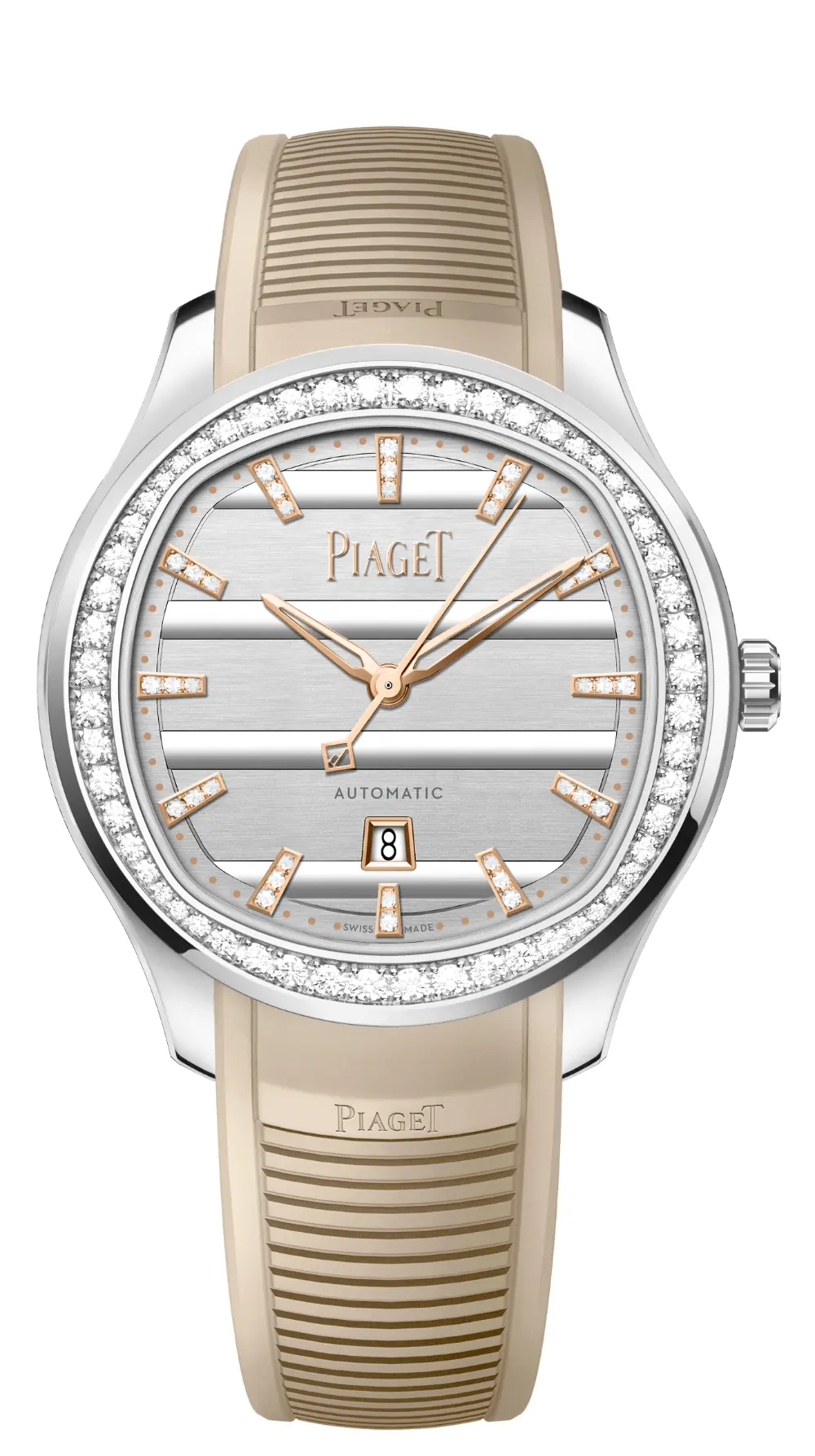 The 36 mm Piaget Polo Signature G0A51011 with a diamond bezel
Combining the brilliant gadroons that brought fame to the historic Piaget Polo with the sport-chic allure of the iconic Piaget Polo Date, this duo is enhanced by a silver-coloured dial – a nod to the Maison’s timeless elegance. The interchangeable rubber strap (available in beige for the 36 mm version adorned with 96 brilliant-cut diamonds, or in khaki green for the 42 mm variation) and the subtle nod to the codes of the 1979 Piaget Polo firmly root this offering in the here and now, while thoroughly complying with the style codes that have forged Piaget’s identity for decades.
The 2026 Piaget Polo collection demonstrates, now more than ever, its unique ability to transcend time. A cultural style icon created in the late 1970s for a new aristocracy that was revolutionizing the codes of elegance and distinction, it continues to embody quintessential casual chic.