
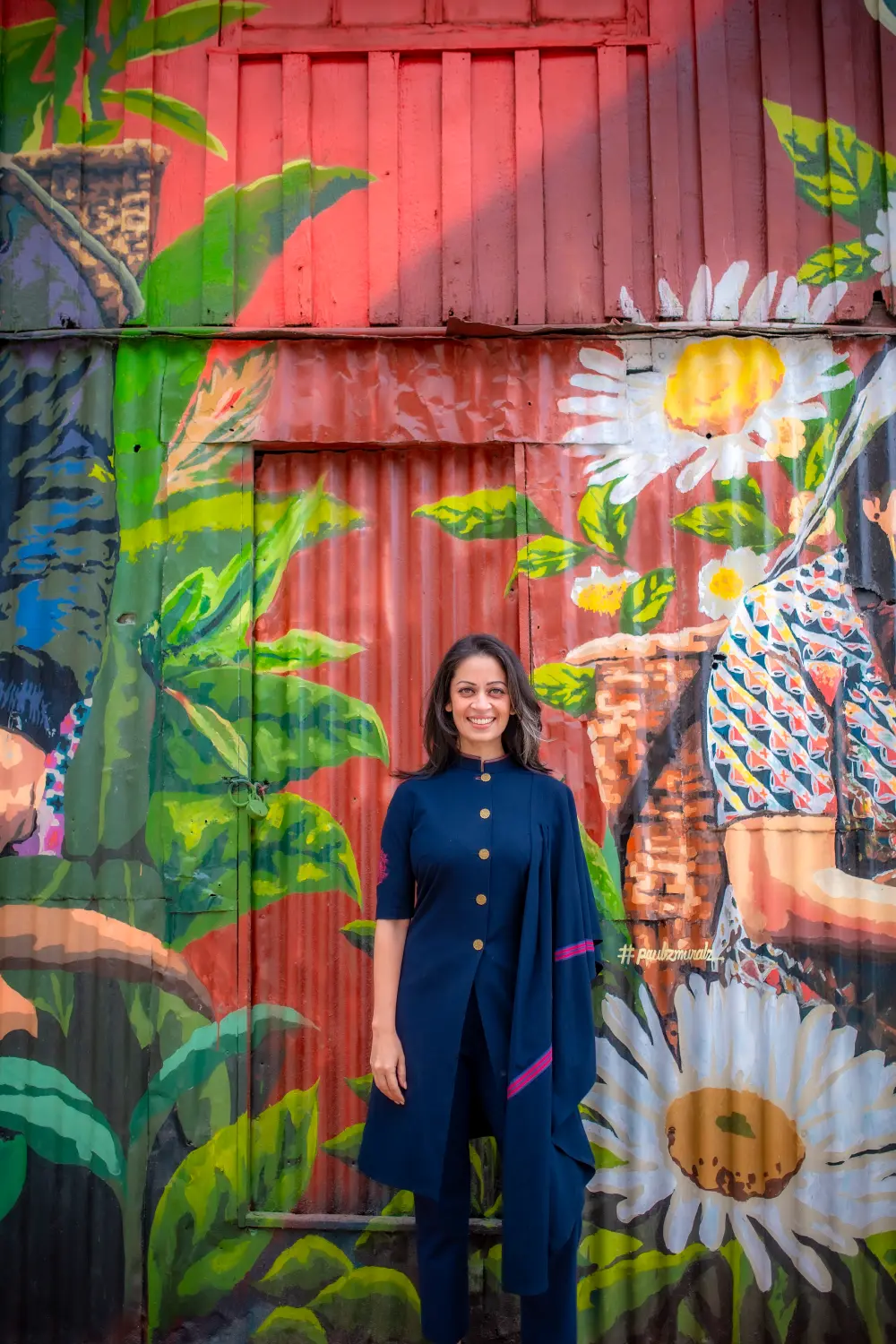
 Oiendrila Ray Kapur, Creative Director and space Designer
From tablescapes to floral art, brand-led visual merchandising to murals, from exhibitions to concerts, Kolkata-based visual scenographer and creative director Oiendrila Ray Kapur has created high-impact installations and projects across India. We speak to her about her design process, and her real-life inspirations.
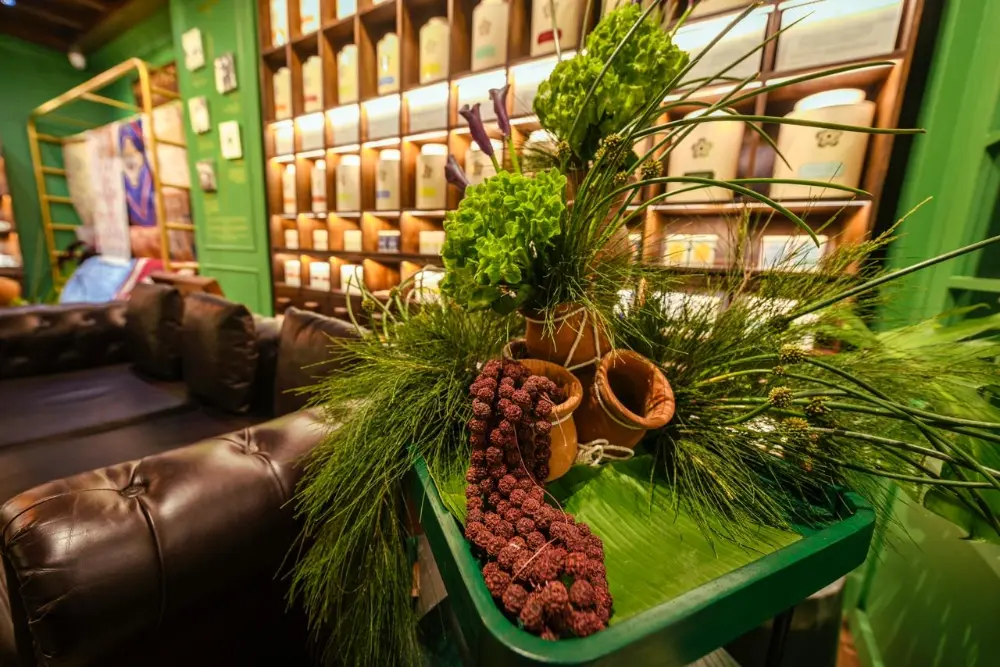 A Project by Oiendrila Ray Kapur
(LI) How did you decide to get into visual scenography - from advertising, I believe?
(ORK) Spaces come naturally to me. I’ve grown up with a father who was very shaukeen (an aficionado), and I think I picked up all the nuances from growing up with him. Advertising gave me branding knowledge and how to interpret a client brief to maximise the brand story. When I left advertising after becoming a new mom, I naturally transgressed into décor, spaces, and experiences.
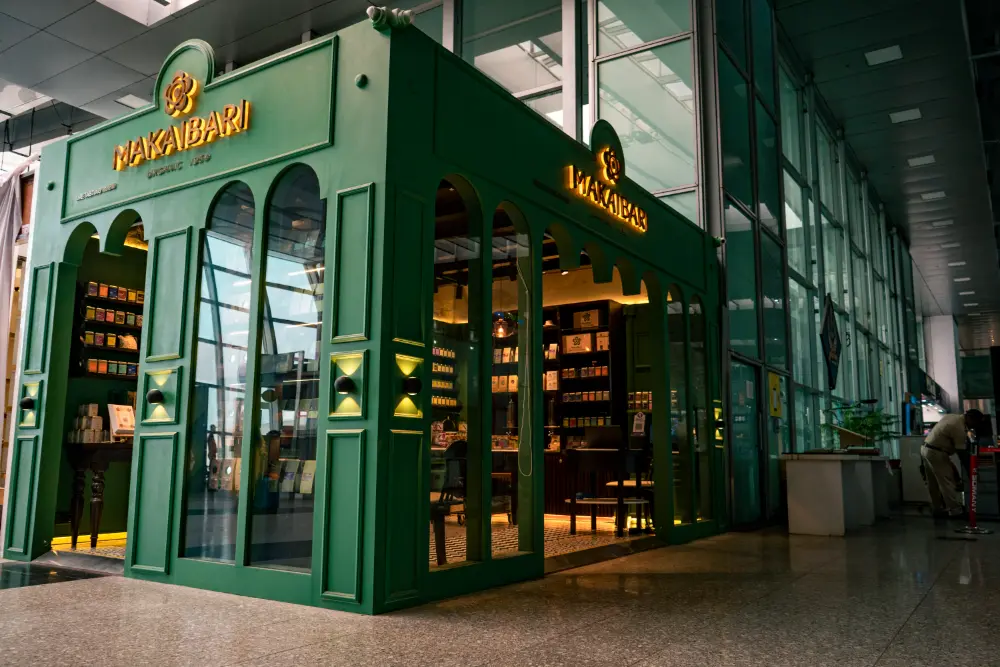 A project for Makaibari by Oiendrila Ray Kapur
Did you study design? What is it about visual and creative scenography that fascinates you?
I studied Visual Communication Design at The Ravensbourne College of Art in London. Any form of creativity really fascinates me. The whole world is design led, from products, to packaging, to storytelling and finally selling something, in every stage design plays a major role. I come in at the last stage where I create the final ambience and tell the story that needs to be told. It’s highly rewarding to see an idea come to life.
Your bio mentions you were inspired by your dad, how so, please could you share?
My dad was a multifaceted human being and I’m extremely lucky to be his daughter. He was from a rural zamindari family in Bengal and was educated in a British boarding school, so he was an amalgamation of every earthy and rural, a life filled with traditions, music, cultural exposure and the British side that was impeccable in the way he dressed to the way he hosted people. Every day with him was a learning experience - from finding faces in marble floors, to reinventing everyday things to try and make it better! He’d always encourage me to think, redesign, reimagine. My biggest gift is the immense exposure he’s given me.
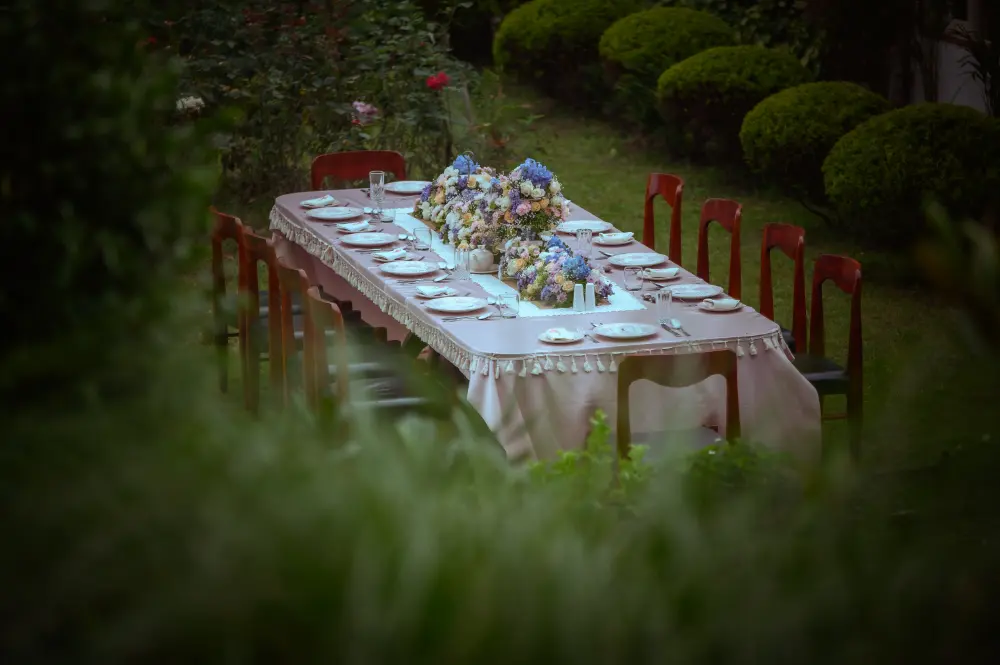 A tablescape by Oiendrila Ray Kapur
You live is such a culture rich city – Kolkata – what are the influences that you draw from everyday life and Kolkata art and culture for your installations?
Everything! I’m a very rooted person and I’m extremely proud of my cultural heritage. I especially love the nuances of growing up in a joint family where every family member knew how to either sing, dance, play different instruments, draw, and paint, apart from being professionals in their daily life.
I feel most Bengali families are very similar to mine. That’s where the culture really speaks in this city. No wonder we have artists and musicians in every lane and around every corner. Kolkata is also very diverse as a city, we have seven different communities that have made this city their home from before the British arrived. I feel we’ve imbibed a lot from them as well. Kolkata celebrates Diwali and Christmas with as much gusto as Durga Puja. I take inspiration from both my Bengali roots and also from the spirit of this city as a whole.
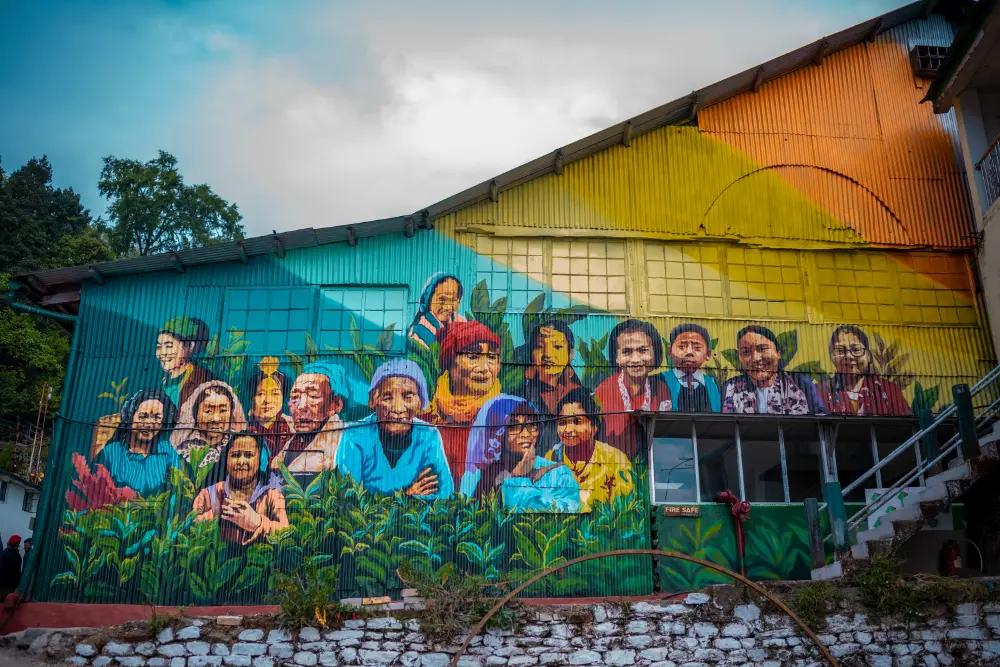 A mural by Oiendrila Ray Kapur
Which has been your most challenging installation/scenography and why?
The Makaibari Mural for G20. I was given the responsibility of revamping a 160-year-old factory that hadn’t been touched since it was built. The time constraint was challenging. Instead of just painting the facade, I decided to do a mural of real tea pluckers from the estate. Makaibari has three generations of tea pluckers and I thought that it was an important story to highlight. We had ten days, really bad weather, and a 200-foot wall to tackle. Once it was done – that feeling of accomplishment was incomparable.
From stores, to events, to concerts, to tables – what are the scenographies you have loved most creating and why?
I love doing concerts and events because I get a larger scale to tell the whole story. (She’s been doing the Dr Utpal Ray Annual Memorial Concert since 2021, with nature-themed décor for the stage, backdrop, and ambience.) Having said that, any creative process for me is like a little prayer being answered and I have a lot of fun doing even the smallest table that sets the mood just right. I also love Visual Merchandising for brands; my advertising background gets put to use.
We as a country are now very entrenched in the visual – how has this interest in scenography changed in the last five years? Why is storytelling so important today?
Storytelling is extremely important in how the brand portrays itself, how it wants to be seen and recognised in the market. Where it places itself amongst hundreds of other similar products. Storytelling creates pulls in the right audience to the brand.
I feel like we are entrenched in the visual and we have too much information coming at us – in the luxury space we’re moving towards a quieter language. It’s not loud anymore. Luxury is now organic and hand crafted. It doesn’t scream for attention, it just draws you in with the emotion of the story being told.
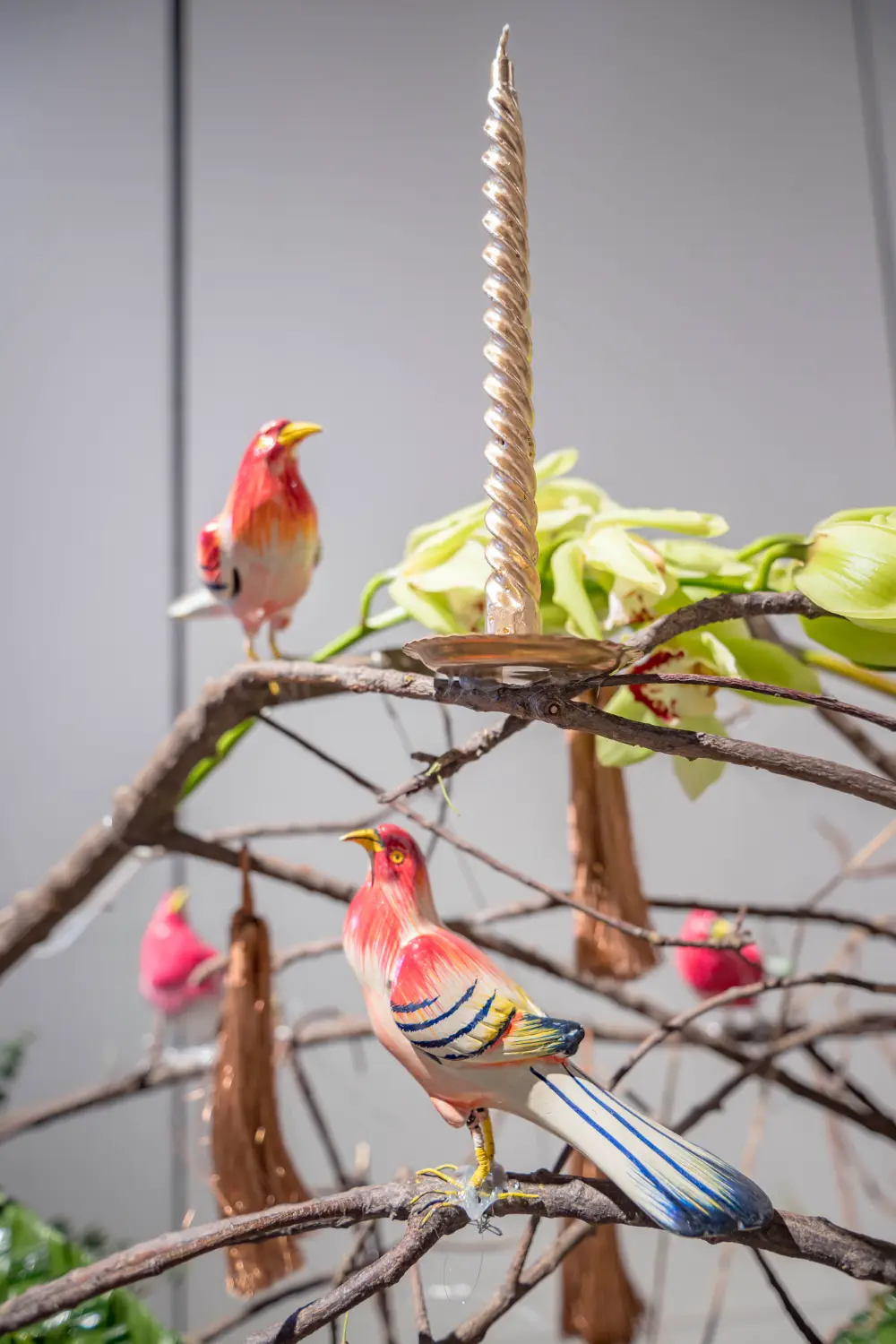 The scenographer collects artisanal objects from local craftspersons for her installations and decor
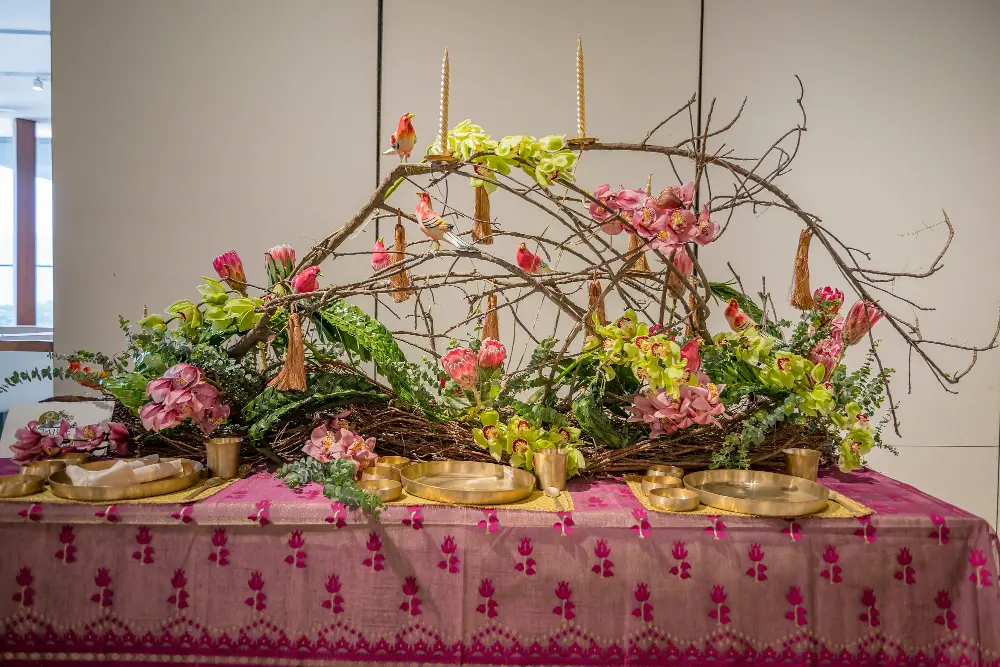 The birds form a part of a larger vision, in this case a tablescape
The materials that you use – where do you pick up the pots, the backdrops, flowers and textiles from?
I love using local produce. I love using flowers that grow in villages that have been dismissed as utterly regular. I reimagine the use of everyday objects that we find readily. My most favourite thing to do is visit crafts villages and pick up pieces for my decor. Recently I had done a table with clay birds from a small village in Bengal called Krishnanagar. It’s a dying art and what fascinated me was the workmanship and the dexterity with which these dolls are made.
What is on your moodboard right now?
Terracotta and Dokra art. Reimagining it on a huge scale. I’m pretty excited about this one.
What is your design process?
The most important part of the design process is to understand the client brief and more important than that is to understand the client and their mindset. I take inspiration from key words that I jot down through the briefing and then develop one or more concepts before we settle on the final way forward.
Where all have you done your projects – any internationally?
We’ve worked pan-India, I would love to take my work on a global scale soon, by God’s grace.
Do you think you would love to do a department store window in
New York City – if you had to do one, what would it be?Absolutely! There’s so much scope! I would always work with the clients brief; blank canvases are extremely exciting to me.
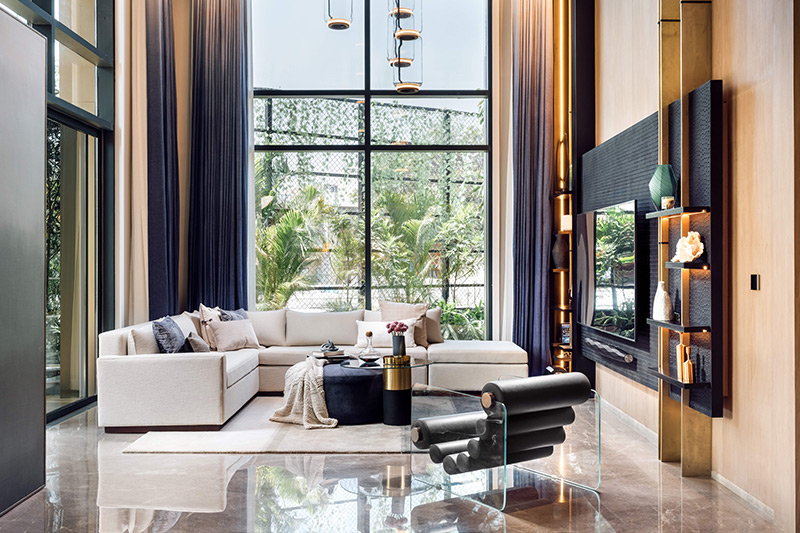
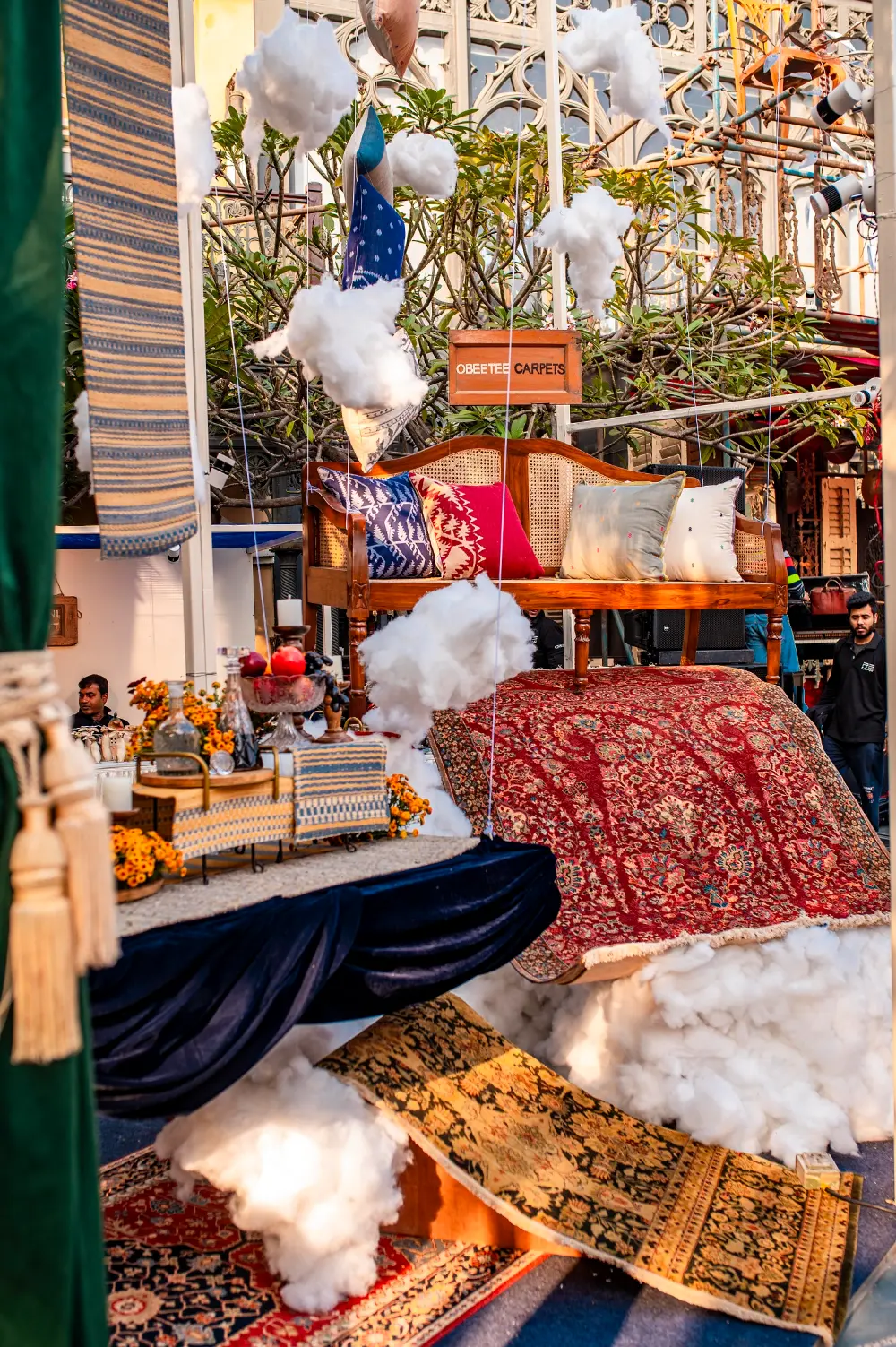 A recent project by Oiendrila Ray Kapur
What is the most exciting part about scenography – and is this a growing field – would you encourage youngsters to join?
Everything needs to be displayed or spoken about in the right light. This is where scenography comes in. If it’s a luxury product, the space should immediately give you a sense of aspiration, to want to be a part of it. Organic brands would speak a more earthy story, the space created should make you completely trust the authenticity of the product as organic. So scenography sets the mood for product/ service. Youngsters with a flair for creative spaces and storytelling, absolutely look at scenography as a profession. It allows a huge scope for creative expression.
What was it like to get your Times Design Ikons Award, and what award would you love to win?
It was an absolute honour. It’s always a happy feeling to be recognized for your work.
I would want to make a difference in the décor space by using organic and sustainable materials. There is a huge amount of wastage in this field and I hope that someday I can make my country proud by incorporating its various arts, crafts in decor spaces. A national award maybe?